Chiptune Alchemy 6: PC Engine & TurboGrafx-16 Sound
- Chiptune Alchemy
- Video game music
- Console audio hardware
- NES
- Sega Genesis
· Aaron Lehnen
NEC’s Modular Audio Ecosystem
(PC Engine & TurboGrafx-16)
When we talk about the 8-bit and 16-bit console wars, Nintendo and Sega usually steal the spotlight. But in 1987, NEC and Hudson Soft released a machine in Japan that bridged the gap between generations: the PC Engine (known in North America as the TurboGrafx-16).
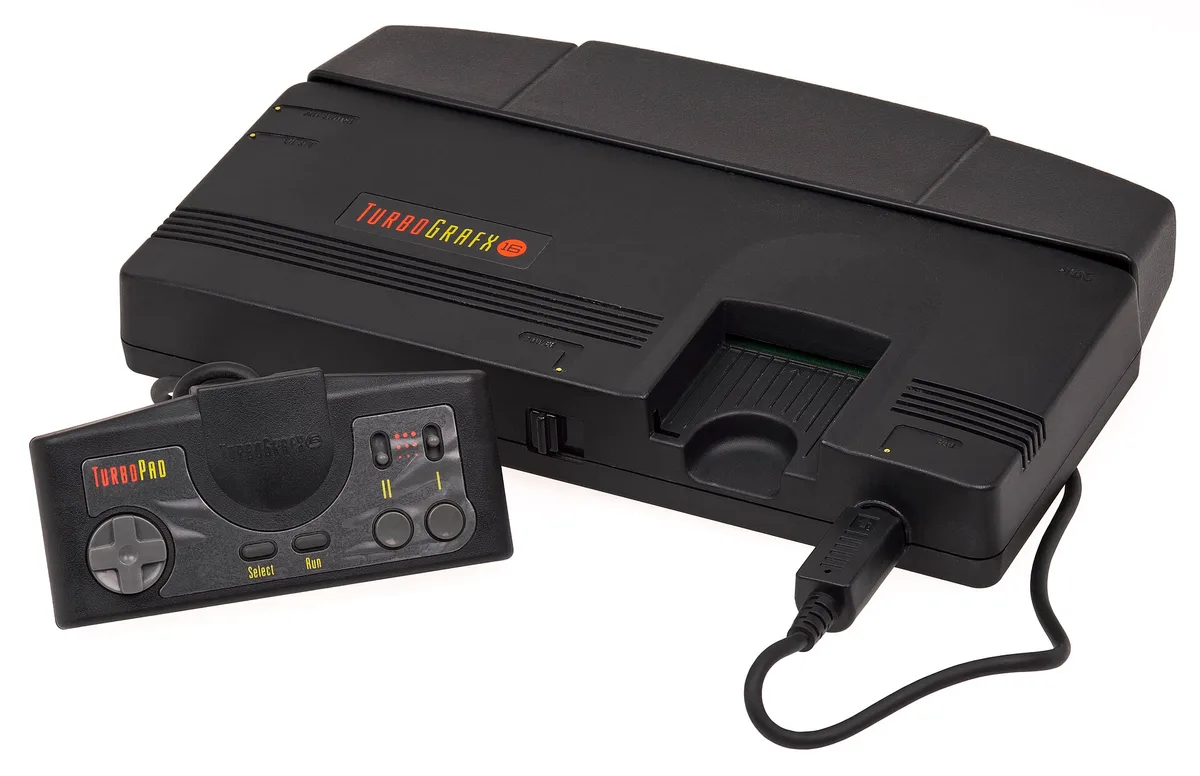
NEC treated their hardware ecosystem less like a traditional video game console and more like high-end stereo equipment. With at least 17 distinct console models, portables, and CD add-ons released between 1987 and 1994, the sheer hardware fragmentation is legendary.
Underneath the wild array of plastic shells, NEC’s audio architecture split the era into two distinct sound profiles: Custom PSG Wavetable Synthesis and Hybrid CD-ROM / ADPCM Audio.
1. The HuCard Engine:
6-Channel Wavetable Synthesis
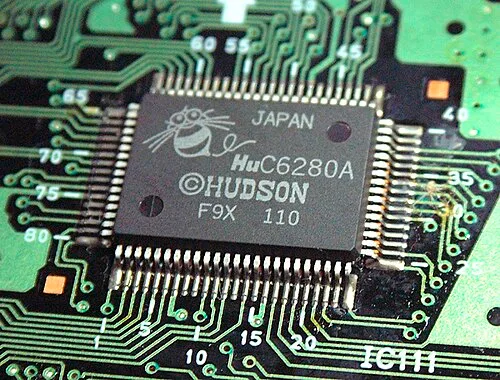
Every standalone console in the NEC family—from the original white PC Engine and Japanese handhelds to the North American TurboGrafx-16—relied on the exact same internal Hudson Soft HuC6280 CPU, which contained an integrated 6-channel Programmable Sound Generator (PSG).
- Custom Wavetables: Unlike the fixed square waves of the NES or Master System, the HuC6280 allowed composers to load custom 5-bit, 32-sample waveforms into each channel. This gave the platform a remarkably flexible, bright sonic signature capable of warm synth leads and glassy chimes.
- Native Stereo Panning: The chip supported dynamic volume control and per-channel stereo panning natively in code.
- The Mono Bottleneck: Despite the chip generating stereo audio, base consoles only outputted mono sound through their standard RF ports! To extract true stereo channels, players had to attach an expansion peripheral to the bus port on the back of the console.
2. The CD-ROM² Expansion:
Red Book Audio & ADPCM
When NEC launched the CD-ROM² attachment in 1988, they fundamentally transformed game audio overnight. By introducing optical discs to home consoles years before Sega or Sony, they added two entirely new audio streams that operated alongside the native PSG chip:
- Red Book CD Audio: Games could play studio-recorded music straight off the disc, giving RPGs sweeping orchestral scores, live studio guitars, and full voice acting.
- OKI M5205 ADPCM Hardware: Because streaming full CD audio consumed significant system bandwidth, the CD dock added a dedicated OKI M5205 ADPCM audio chip. This secondary chip handled compressed digital voice clips and sound effects on top of background music without bogging down the main CPU.
The Hardware Family Tree
Because NEC designed their ecosystem around modular expansions, their console family tree is divided into four distinct categories:
Base HuCard Consoles
- PC Engine (1987): The original ultra-compact white Japanese console.
- TurboGrafx-16 (1989): The resized North American release with a larger black-and-red housing.
- PC Engine CoreGrafx / CoreGrafx II (1989/1991): Japanese revisions swapping raw RF video for clean A/V output ports.
- PC Engine Shuttle & SuperGrafx (1989): The Shuttle was a budget spaceship-styled model lacking CD expansion ports, while the SuperGrafx was an upgraded console with extra video hardware.
Handheld Form Factors
- TurboExpress / PC Engine GT (1990): A portable handheld running standard HuCard cartridges on a backlit color display.
- PC Engine LT (1991): An expensive clamshell portable featuring a built-in folding monitor and controller base.
CD Expansion Add-Ons
- PC Engine CD-ROM² / TurboGrafx-CD (1988/1989): External two-piece dock units pairing a standalone CD drive with the base console.
- Super CD-ROM² (1991): A streamlined single-unit external drive designed to plug straight into newer CoreGrafx models.
Unified All-In-One Systems
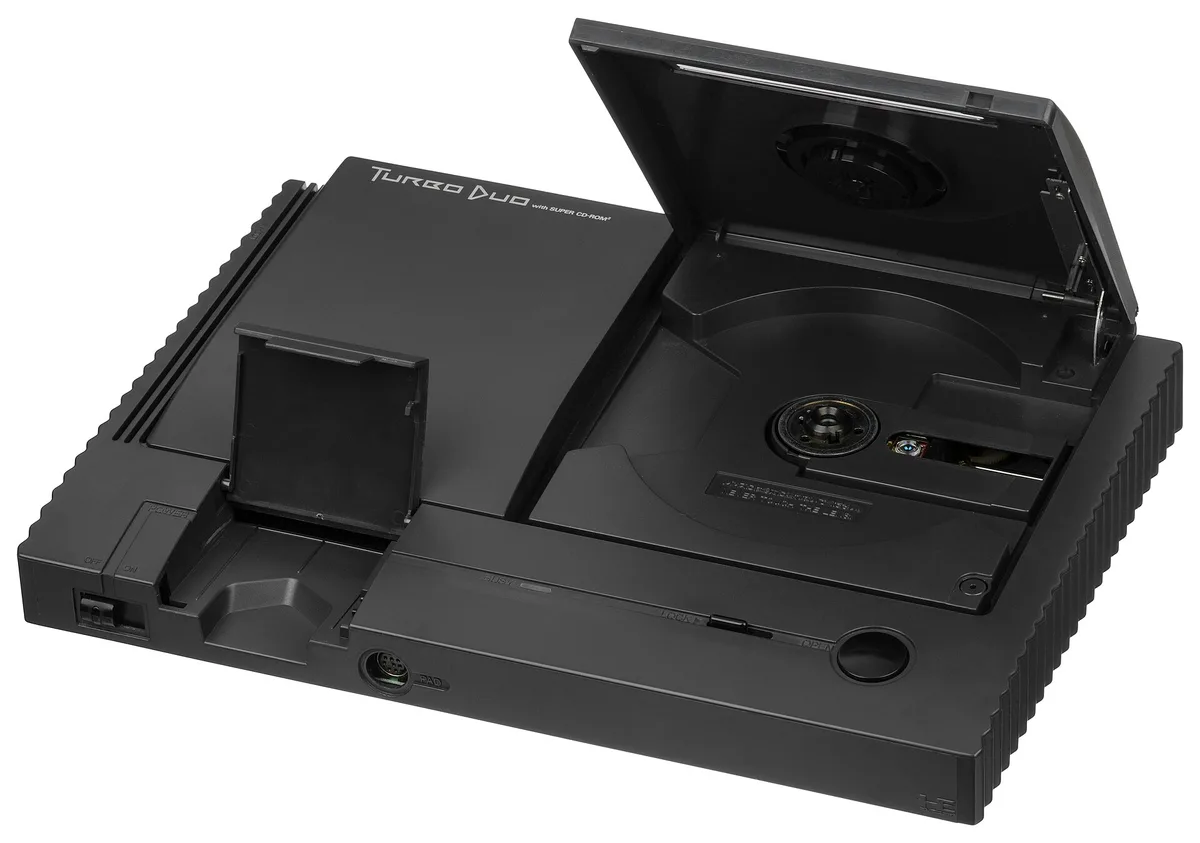
- PC Engine Duo / TurboDuo (1991/1992): The unified flagship hardware merging the HuCard slot and CD-ROM drive into a single console.
- PC Engine Duo-R / Duo-RX (1993/1994): Cost-reduced, highly reliable revisions featuring rounded off-white shells.
Collector’s Note:
The Dreaded “Duo Audio Failure”
Leaky Capacitors in Original Duos: Early TurboDuo and PC Engine Duo models used notoriously low-quality surface-mount capacitors. Over time, these capacitors leak fluid onto the motherboard, causing audio channels to die or drop to an imperceptible whisper. Restoring a stock Duo requires a full capacitor replacement (recap).
Duo-R / Duo-RX Reliability: NEC corrected this defect in later Duo-R and Duo-RX models by switching to higher-grade through-hole capacitors, making these late-era Japanese revisions the gold standard for reliable stock audio today.
The Hall of Fame Benchmarks
HuCard Soundtracks: 5 PSG Wavetable Highlights
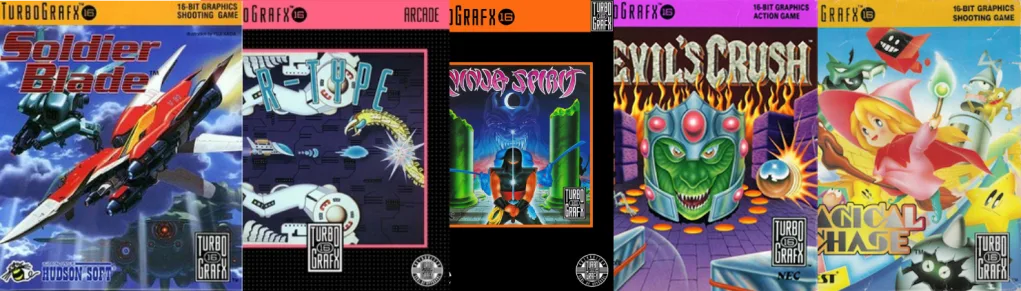
- Soldier Blade(Keita Hoshi & Makiko Tanifuji)
- The Hardware Trick: Dynamic 5-bit sample RAM buffer updates paired with high-speed channel panning across the HuC6280.
- Why it matters: The crown jewel of Hudson’s Caravan shooting games. It uses the custom wavetable RAM to push driving, glass-like synth leads, punchy bass loops, and stereo panning that make 6 PSG channels sound like a full FM synthesizer setup.
- R-Type(Masato Nishimura)
- The Hardware Trick: Precise 32-sample waveform sculpting simulating metallic arcade FM operators.
- Why it matters: Porting Irem’s legendary arcade game to a home console required recreating complex FM synthesis on a PSG chip. Nishimura hand-crafted custom 5-bit waveforms to replicate the original arcade’s metallic punch without losing channel clarity.
- Ninja Spirit / Saigo no Nindou(Masahiko Ishida)
- The Hardware Trick: High-speed software pitch bends and custom noise-channel filtering for percussive impact.
- Why it matters: A masterclass in dark, atmospheric action scoring. The soundtrack weaves traditional Japanese shamisen and flute motifs with rapid-fire bass arpeggios, demonstrating how warm custom wavetables could sound compared to rigid square waves.
- Devil’s Crush / Alien Crush(Toshiaki Sakoda)
- The Hardware Trick: Continuous waveform register swaps mid-frame for complex progressive rock harmonies.
- Why it matters: Widely regarded as one of the greatest pinball soundtracks ever made. Sakoda pushed the HuC6280 with driving rock basslines, gothic organ emulation, and soaring lead hooks that rivaled 16-bit Genesis scores.
- Magical Chase(Hitoshi Sakimoto & Masaharu Iwata)
- The Hardware Trick: Custom-coded audio driver optimizing channel volume envelopes for orchestral emulation.
- Why it matters: Before Final Fantasy Tactics, Sakimoto and Iwata unlocked the PC Engine’s wavetable chip to write a bright, brass-heavy fantasy score featuring signature orchestral counterpoint and stereo depth.
CD-ROM² & Super CD-ROM²: 5 Red Book & ADPCM Benchmarks
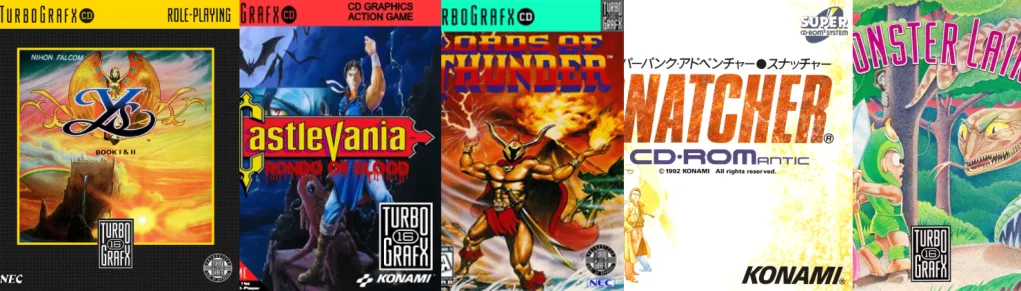
- Ys I & II(Yuzo Koshiro, Mieko Ishikawa, & Ryo Yonemitsu)
- The Hardware Trick: Studio Redbook CD audio streaming paired with OKI M5205 ADPCM voice and drum sample playback.
- Why it matters: The game that proved CD-ROMs were the future of gaming in 1989. Yonemitsu’s arrangements transformed Falcom’s synth tracks into a full rock-and-orchestral masterpiece with live studio guitars, stunning brass, and crisp digital audio.
- Castlevania: Rondo of Blood / Akumajou Dracula X(Konami Kukeiha Club)
- The Hardware Trick: Redbook CD audio streaming backed by real-time ADPCM gothic sound effects.
- Why it matters: One of the most celebrated soundtracks in the entire Castlevania franchise. Konami utilized the CD format to deliver high-energy hard rock, pipe organs, slap bass, and live-recorded strings alongside full Japanese voice acting.
- Lords of Thunder / Wind of Thunder(T’s Music / Satoshi Miyashita)
- The Hardware Trick: Full 44.1kHz stereo Redbook audio streaming dedicated entirely to heavy metal instrumentation.
- Why it matters: An absolute assault of heavy metal. The CD drive streams roaring electric guitar solos, heavy double-kick drum tracks, and driving basslines that were completely impossible on traditional ROM cartridges.
- Snatcher (CD-ROM² Version)(Konami Kukeiha Club)
- The Hardware Trick: ADPCM ambient soundscape looping integrated with Redbook synthwave tracks.
- Why it matters: Hideo Kojima’s cyberpunk adventure relies on cinematic tension. The CD audio delivers punchy 80s synth-brass motifs and ambient noir soundscapes that gave the game a movie-like atmosphere.
- Monster Lair: Wonder Boy III (CD-ROM²)(Shinichi Sakamoto)
- The Hardware Trick: Redbook CD audio streaming combined with native HuC6280 PSG sound effects.
- Why it matters: Demonstrates the hybrid power of the system. While the optical disc streams redbook pop-rock tracks, the base console’s native PSG chip handles active gameplay sound effects simultaneously without interrupting the music stream.
Closing Thoughts & What’s Next
Whether through custom 5-bit wavetable synthesis on tiny HuCards or full studio Redbook audio streaming on CD-ROM², NEC’s modular ecosystem proved that audio engineering could bridge the gap between 8-bit chiptune limits and modern digital sound.
Reimagining the Classics: Chiptune Meets Modern Genres
Understanding the engineering limits of these chips is one thing—hearing how these composition frameworks translate into modern musical styles is another.
If you enjoy these iconic soundtracks and want to hear a modern reimagining of these classic franchise melodies through Prog Metal, Synthwave, Reggae, Rock, EDM, and other genre lenses, here is a showcase of my own cover arrangements:
8-Bit Reimagining (24)
My takes on familiar NES and arcade soundtracks.
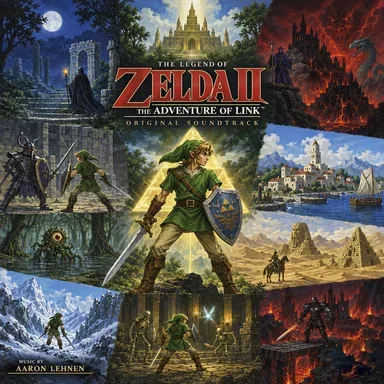 Zelda 2: The Adventure Of Link
Browse 16 tracks
- Link's Eternal Quest Continues (Title Theme)
- A New Adventure Begins Overworld
- Deep Into Candlelit Caves
- Hyrulean Treasures
- Healers Of Hyrule
- Surprise! Another Battle
- Leveled Up
- Traversing The Palaces
- The Bosses' Chambers
- The Crystal Altars
- House Of Error
- The Great Palace
- Final Boss: Dark Link
- Triforce Of Courage Obtained
- Princess Zelda Awakens
- Ending Credits
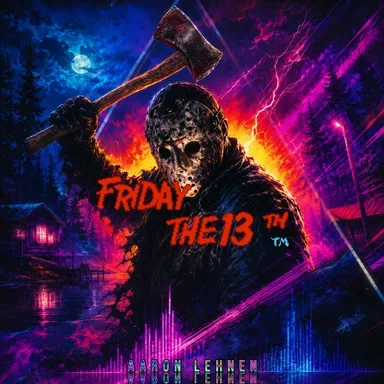 Friday The 13th (NES Soundtrack)
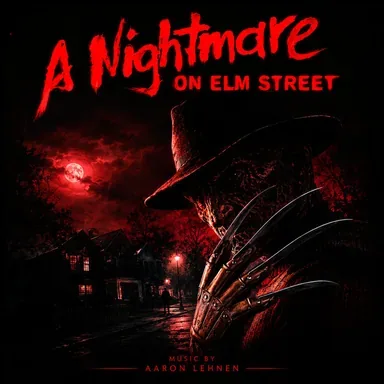 Nightmare On Elm Street (NES Soundtrack)
Browse 18 tracks
- Nightmare On Elm Street Title Theme
- Town Of Elm Street
- House 1
- House 2
- House 3
- Basement 1
- Freddy Krueger Incarnations' Boss Battles
- Junkyard
- Cemetary
- Freddy's Crack House (Unused in NES Game)
- Elm High School
- Basement 2
- Falling Asleep
- 1..2.. Freddy's Coming For You!!
- Freddy
- Wake Up Radio
- The End - Freddy Is Dead...
- Game Over
 Jaws (Extended Soundtrack)
 Wrecking Crew
 T & C Surf Designs - Wood & Water Rage
Browse 5 tracks
 R.C. Pro-Am
 Color A Dinosaur (NES)
Browse 4 tracks
 Galaga
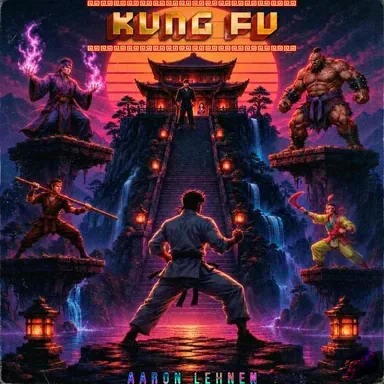 Kung Fu: Five Floors of Fury
Browse 10 tracks
- Opening The Pagoda
- Floor 1: The First Flight (Boss: Stick Fighter)
- Floor 2: The Snake Trap (Boss: Boomerang Thrower)
- Floor 3: The Big Brawl (Boss: Giant)
- Floor 4: The Mystic Hall (Boss: Magician)
- Floor 5: The Penthouse Showdown (Boss: Mr. X)
- Boss Battles (General Mandate Arrangement)
- Stage Cleared & Bosses Defeated
- Saving Sylvia
- Game Over
 DuckTales: Riches, Relics, & Moonlight
Browse 17 tracks
- Title Theme (NES)
- Map Room Land Select
- Level Intro
- Jungle (The Amazon)
- Invincibility
- Ghost House (Transylvania)
- Boss Battles
- Treasure Acquired & Level Completed
- Underground (African Mines)
- Lose Life
- Game Over
- Snow Mountain (The Himalayas)
- Launchpad - Gyro Bonus
- The Moon Surface
- Bonus Track: DuckTales Cartoon Theme
- Bonus Track: Transylvania (Prototype)
- Bonus Track: DuckTales Theme Alt Take
 Super Mario Bros. 2: Panic in Subcon
 Super Mario Bros. 3: All The Worlds Staged (Double Album)
Browse 41 tracks
- World 1 - Grass Land
- Overworld
- Cursed King's Throne Room
- Airship
- World Conquered King Restored
- World 2 - Koopahari Desert
- Underground
- World 3 - Sea Side
- Under Waterworld
- Got A Card! Fireworks Fanfare
- Music Box
- World 4 - Big Island
- Hammer Bros.
- Fortress
- Fortress & Airship Bosses - Koopa's Kids & Boom Boom.wav
- World 5 - The Sky
- Athletic
- Course Cleared
- Toad's House
- Super Star Power
- World 6 - Iced land
- Miss Lost Life
- Game Over
- Whistle To Warp Island
- World 7 - Pipe Maze
- N-Spade Memory & Slots
- World 8 - Dark Castle Of Koopa
- Bowser, King of Koopas.
- Ending & Credits
- Overworld (Sped Up)
- Under Waterworld (Sped Up)
- Athletic Theme (Sped Up)
- Hammer Bros. (Sped Up)
- Super Power Star (Sped Up)
- Toad's House (Sped Up)
- Underground (Sped Up)
- Warp island/Coin Heaven (Sped Up)
- Fortress (Sped Up)
- Koppa Kids & Boom Boom (Sped Up)
- Airship (Sped Up)
- Bowser, King Of Koopas (Sped Up)
 Super Mario Bros.
Browse 17 tracks
- Overworld Ground Theme
- Level Complete
- Underground Tunnels
- Death, Player Down
- 1UP
- Underwater Swim Theme
- StarMan Invincibility
- Koopa's Castle
- Princess Is In Another Castle
- Ending
- Warning
- Overworld Ground Theme (Hurray, Sped Up)
- Underground Tunnels (Hurray, Sped Up)
- Underwater Swim Theme (Hurray, Sped Up)
- StarMan Invincibility (Hurray, Sped Up)
- Koopa's Castle (Hurray, Sped Up)
- Game Over
 CastleVania 2: Simon's Quest
 CastleVania: First Blood
 Teenage Mutant Ninja Turtles (NES): Return of the Ooze
Browse 18 tracks
- Introduction Title Theme
- Level 1 Theme Overworld
- Underworld Sewers
- Difficult Fight Mini-Boss
- Level Clear
- Level 2 Theme Dam
- Turtle Captured
- Underwater Scene
- Hurry! PANIC!! Dam Explodes
- Game Over
- Level 5 Theme/Base
- Base Underworld Caverns
- Main Boss Shredder
- Shredder Defeated
- Epilogue
- (Bonus) Movie Theme - Turtle Rhapsody
- (Bonus) TMNT Cartoon Theme
- (Bonus) TMNT Cartoon Theme (Instrumental)
 Chiptune 'N Dale Retro Rangers (NES OST)
Browse 20 tracks
- Chip 'n Dale Title Theme
- Zone 0
- Bonus Zone
- Zone A, C, E
- Overworld Map
- Zone B
- Power Up
- Zone D
- Death
- Zone F, H I
- Game Over
- Zone G
- Zone Clear
- Zone J
- Boss Theme
- Ending
- (Bonus Track) Cartoon Title Theme - Rock Version
- (Bonus Track) Cartoon Title Theme - Rock Instrumental Version
- (Bonus Track) Zone J - Rock Version
- Retro Rangers Medley SloWave Remix
 Punch-Out: Round 1
Browse 22 tracks
- Punch-Out Theme (Introduction)
- Round Begins
- Fight!!
- Glass Joe
- Von Kaiser
- Winning
- Won Match
- Title Bout
- Piston Honda
- New Champ!
- Training Montage
- Don Flamenco
- King Hippo
- Get Up, Mac!!
- Lost Match
- Game Over
- Soda Popinski
- World Champion
- The Dream Fight!!
- Punch-Out Theme (Reprise)
- [Bonus Track] Fight Remix
- [Bonus Track] Super Punch-Out!! 8-Bit Demix
 Life Force: Phoenix Ascends
 Super Dodge Ball (NES) OST: Dodge This!
 The Legend of Zelda
 Contra (NES): Metal Reincarnated
Browse 14 tracks
- Title Theme (Extended)
- Story Introduction (JP)
- Area 2 - Inside Enemy Base 1
- Area 3 - Waterfall
- Area 4 - Inside Enemy Base 2
- Boss Battle: Core Of The Enemy
- Area Clear
- Area 5 - Snow Field
- Area 6 - Energy Zone
- Area 7 - Hangar
- Area 8 - Alien's Lair
- Alien Dead - All Clear
- Ending/Credits
- *Bonus Track*: Area 1 - Jungle (Alien Jungle Remix)
 Metroid
16-Bit Reimagining (3)
From the Genesis to the SNES, these melodies still have plenty of places to go.
 Super Mario All-Stars: Dreams, Kingdoms & Super Stars
Browse 93 tracks
- Presents - Logo Jingle (Deluxe)
- All-Stars Title Theme (Deluxe)
- Screen Up & Down (Deluxe)
- Game Select (Deluxe)
- SMB1 - Title (Deluxe)
- SMB1 - Overworld Ground Theme (Deluxe)
- SMB1 - Level Complete
- SMB1 - Tunnel Transition
- SMB1 - Underground Tunnels (Deluxe)
- SMB1 - Death, Player Down (Deluxe)
- SMB1 - Game Over (Deluxe)
- SMB1 - 1UP
- SMB1 - Bonus Game (Deluxe)
- SMB1 - Underwater Swim Theme (Deluxe)
- SMB1 - StarMan Invincibility (Deluxe)
- SMB1 - Koopa's Castle
- SMB 1 - King Koopa's Clones (Deluxe)
- SMB1 - The Princess Is In Another Castle (Deluxe)
- SMB1 - Final King Koopa (Deluxe)
- SMB1 - Ending (Deluxe)
- Lost Levels - Title (Deluxe)
- Lost Levels - Ending (Deluxe)
- SMB2 - Intro Title Theme (Deluxe)
- SMB2 - Please Select Player (Deluxe)
- SMB2 - Overworld
- SMB2 - Birdo & Other Boss Battles
- SMB2 - Boss Victory
- SMB2 - Underworld
- SMB2 - World Course Clear
- SMB2 - Miss/Lose
- SMB2 - Game Over
- SMB2 - Bonus Chance (Deluxe)
- SMB2 - Sub-Space Potions (Deluxe)
- SMB2 - Warp (Deluxe)
- SMB2 - Power-Up Fanfare (Deluxe)
- SMB2 - Secret Stars (Deluxe)
- SMB2 - Final Boss - Wart (Deluxe)
- SMB2 - Ending (Deluxe)
- SMB3 - Title (Deluxe)
- SMB3 - World 1: Grass Land
- SMB3 - Overworld (Deluxe)
- SMB3 - Cursed King's Throne Room
- SMB3 - Airship
- SMB3 - World Conquered King Restored
- SMB3 - World 2: Koopahari Desert
- SMB3 - Underground
- SMB3 - World 3: Sea Side (Deluxe)
- SMB3 - Under Waterworld
- SMB3 - Music Box (Deluxe)
- SMB3 - Got A Card! Fireworks Fanfare
- SMB3 - World 4: Big Island (Deluxe)
- SMB3 - Hammer Bros. (Deluxe)
- SMB3 - Fortress
- SMB3 - Fortress & Airship Bosses: Koopa's Kids & Boom Boom
- SMB3 - Princess Letters (Deluxe)
- SMB3 - World 5: The Sky
- SMB3 - Athletic
- SMB3 - Course Clear Fanfare (Deluxe)
- SMB3 - Toad's House
- SMB3 - Super Star Power (Deluxe)
- SMB3 - World 6: Iced land
- SMB3 - Miss Lost Life
- SMB3 - Game Over
- SMB3 - Whistle Sound ~ Warp Island (Deluxe)
- SMB3 - World 7: Pipe Maze
- SMB3 - N-Spade ~ Nervous Breakdown
- SMB3 - Bonus Win (Deluxe)
- SMB3 - Bowser Message (Deluxe)
- SMB3 - World 8: Dark Castle Of Koopa
- SMB3 - Bowser, King of Koopas.
- SMB3 - Chamber Opened (Deluxe)
- SMB3 - Ending (Deluxe)
- Warning
- SMB1 - Overworld Ground Theme (Hurry, Sped Up - Deluxe)
- SMB1 - Bonus Game (Hurry, Sped Up - Deluxe)
- SMB1 - Underground Tunnels (Hurry, Sped Up - Deluxe)
- SMB1 - Underwater Swim Theme (Hurry, Sped Up - Deluxe)
- SMB1 - StarMan Invincibility (Hurry, Sped Up - Deluxe)
- SMB1 - Koopa's Castle (Hurry, Sped Up)
- SMB1 - King Koopa's Clones (Hurry, Sped Up - Deluxe)
- SMB1 - Final King Koopa (Hurry, Sped Up - Deluxe)
- SMB3 - Overworld (Hurry, Sped Up - Deluxe)
- SMB3 - Airship (Hurry, Sped Up)
- SMB3 - Underground (Hurry, Sped Up)
- SMB3 - Under Waterworld (Hurry, Sped Up)
- SMB3 - Athletic (Hurry, Sped Up)
- SMB3 - Toad's House (Hurry, Sped Up)
- SMB3 - Warp Island/Coin Heaven (Hurry, Sped Up - Deluxe)
- SMB3 - Hammer Bros. (Hurry, Sped Up - Deluxe)
- SMB3 - Fortress (Hurry, Sped Up)
- SMB3 - Fortress & Airship Bosses: Koopa's Kids & Boom Boom (Hurry, Sped Up)
- SMB3 - Super Star Power (Hurry, Sped Up - Deluxe)
- SMB3 - Bowser, King of Koopas (Hurry, Sped Up)
 Chrono Trigger - Fragments of Time (EP)
 Sonic The Hedgehog (Genesis Extended)
Browse 30 tracks
- Intro/Title Theme (SEGA)
- Green Hill Zone (Act 1)
- Green Hill Zone (Act 2)
- Green Hill Zone (Act 3)
- Marble Zone (Act 1)
- Marble Zone (Act 2)
- Marble Zone (Act 3)
- Act Clear
- Special Stage
- Chaos Emerald
- Spring Yard Zone (Act 1)
- Spring Yard Zone (Act 2)
- Spring Yard Zone (Act 3)
- Labyrinth Zone (Act 1)
- Labyrinth Zone (Act 2)
- Labyrinth Zone (Act 3)
- Drowning (I Can't Breath)
- Continue or Game Over?
- 1-Up (Extra Life)
- Invincibility (Try me)
- Star Light Zone (Act 1)
- Star Light Zone (Act 2)
- Star Light Zone (Act 3)
- Dr. Robotnik Theme (Boss Battle Egghead)
- Scrap Brain Zone (Act 1)
- Scrap Brain Zone (Act 2)
- Scrap Brain Zone (Act 3)
- Final Zone, Final Robotnik
- Ending Theme - All Complete
- Credits (End)
Original game soundtracks (8)
Music I composed for games, including NES homebrew and VR projects.
 Eschaton: Battle For Eternity (Vol.1)
Browse 11 tracks
- Title Theme
- Level 1 - The Mission
- Level 1 Boss - Mothership Z
- Level 2 + Boss - Cosmic Crimson Cobalt
- Level 3 - Fantasy Gravity
- Level 3 Boss - Piranha Dragons
- Level 4 + Boss - Odyssey Of The Space Leviathan
- Level 5 - Battle For The Galaxy
- Level 5 - Final Boss Elohssa
- Ending Credits - Hero Of Tomorrow
- Game Over
 CUBE (NES Soundtrack)
 Orchstral Cube
Browse 11 tracks
 Android Scavengers (Game Soundtrack)
 We Are Darkness (VR Game Soundtrack)
 Expedition Aurora (VR Game Soundtrack)
 Elemental Runes (Game Soundtrack)
Browse 9 tracks
 Underwater Chronicles (Game Soundtrack)
Game music compilations (2)
Game themes collected across different worlds and consoles.
 Splash (Water Themed VGM Compilation)
Browse 13 tracks
- Wave Race 64 - Title Theme
- Vectorman - Tidal Surge
- T & C Surf Designs - Wood & Water Rage (NES)
- Sonic 3 - Hydrocity Act 2
- Mega Bomberman - Slammin' Sea
- Mega Man 2 - Bubble Man
- TMNT (NES) - Underwater Theme
- Donkey Kong Country - Aquatic Ambience
- LoZ: Ocarina of Time - Zora's Domain
- Super Adventure Island - Drop Into A Walk
- Kirby's Dream Land - Float Islands
- Knuckles' Chaotix - Seascape (Marina Madness Theme)
- Plok! - Beach
 Under The Covers: 12 Nights of Horror
A film-and-game collection; the game tracks are listed here.
Browse 2 tracks
Game singles and arrangements (11)
Standalone releases, including alternate arrangements.
 Sonic Adventure 2: Stage 1 - City Escape (Escape from the City)
 Legacy Of The Wizard - Opening Theme
 DOOM - E3M1 (Mouth For War)
 Batman (NES) - Underneath The City (Stage 3)
 Street Fighter 2 - Sagat Theme (Metal Version)
 Ninja Gaiden - Unbreakable Determination (Act 4 Scene 2)
 T & C Surf Designs - Wood & Water Rage (NES)
 TMNT Underwater Theme (NES)
 Nightmare on Elm Street Theme (NES - Metal Arrangement)
 Silent Hill Promise (Reprise)
- We Are Darkness (VR Game Soundtrack) — Cinematic Orchestral Collection
Original music with a retro game connection (5)
Original pieces drawing on game music, chiptune sounds, and retro imagery.
 [8-Bit] Aurora (Pre-Evolution)
Browse 12 tracks
- Intro: InterDimensional [8-Bit]
- Liquid Galaxy [8-Bit]
- Psycho-Tropic Nebulae [8-Bit]
- Along The Cosmic Nile [8-Bit]
- East Sky [8-Bit]
- Celestial Romance [8-Bit]
- Wormhole [8-Bit]
- Solar Solace [8-Bit]
- Anti-Matter Aurora [8-Bit]
- Edge Of Space/Time [8-Bit]
- Outro: Exit... The Holographic Universe [8-Bit]
- Bonus: Secret Universe [8-Bit]
 Living Planet Nocturne
 Rapid Rhapsody
 The Adventurer
 Atari
An original single, rather than a game soundtrack cover.
Alongside the covers, you’ll find my original game scores and game-inspired pieces below. Choose “Listen here” to play an album or song while you read. 53 releases in all.
More of my music on Bandcamp ↗