Chiptune Alchemy: Part 1
· Aaron Lehnen
How the NES & Famicom Changed
Video Game Music Forever
This series of blogs is gonna explore the limitations of the classic and beloved Retro Game Consoles, how they make sound, and how the legendary composers were able to still make amazing music despite the constrained parameters.
For our first topic, we are looking at the hardware limitations of the original NES and Famicom 8-bit systems. Despite the limitations, this era has birthed some of the most iconic music in history. Let’s break down the exact mechanics of the classic 8-bit soundscapes:
- The Twin Pulse Channels – Primarily used for melodies
- The Triangle Channel – Primarily used for Basslines & some drums
- The Noise Channel – Primarily used for most of the drums/percussion
- The DPCM Channel – Used as a low-res digital sampler
- NES VS. Famicom – The differences between the audio sound and limitations
Let’s dive into how composers used sheer engineering magic to turn raw electricity into unforgettable tunes.
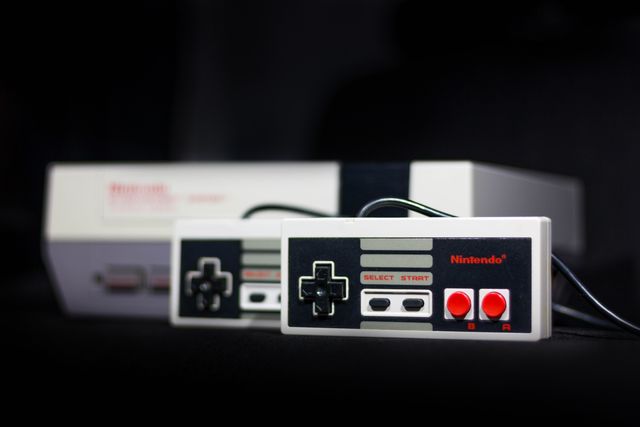
2X Pulse Channels
The twin Pulse channels are the absolute workhorses of the NES soundtrack, primarily responsible for carrying the main lead melodies and harmonies. These channels produce square waves, which give chiptune music its bright, digital, and instantly recognizable robotic “bite.” Composers could alter the “duty cycle”—which changes the width of the wave shape—to shift the texture of the sound from a hollow, woodwind-like tone to a sharp, thin buzz. Because these two channels are identical, developers would often play the exact same melody on both but slightly delay or detune the second channel, creating a rich, echoing chorus effect out of thin air. The four distinct duty cycle settings (12.5%, 25%, 50%, and 75%), controlled by a 2-bit register.
Duty Cycle Settings:
- 75% – Acoustically identical to the 25% setting (inverted/negated pulse)
- 12.5% – Thin, sharp, and buzzy sound (resembles a narrow pulse)
- 25% – Brighter and nasal tone
- 50%: -Standard symmetrical square wave with a hollow, pure tone
Triangle Channel
The Triangle channel is almost always assigned to the bassline, providing a smooth, hollow, and deep geometric wave that glues the tracks together. Its biggest limitation is a bizarre hardware quirk: it has absolutely no volume control! It is either entirely on or entirely off, meaning notes cannot fade out naturally or dynamically quiet down. To work around this, composers had to use rapid, staccato blips to mimic the plucking of a bass guitar or use lightning-fast arpeggios to force the channel into functioning as a heavy, thumping kick drum or low toms. However, there are rare occasions where the triangle timbre was chosen to be used for a higher melody for its desirable tone.
Noise Channel
The Noise channel doesn’t produce musical notes at all; instead, it outputs randomized bursts of static and white noise. This was the entire drum kit for 8-bit musicians. By changing the speed of the static, composers could perfectly replicate sharp hi-hats with quick bursts or snare drums and heavy cymbal crashes with longer, buzzing decays. Outside of keeping the beat, the noise channel was heavily abused by game programmers to create essential sound effects like explosions, laser fire, and crashing waves without interrupting the main melody lines.
DPCM (Sample Channel)
The Delta Pulse Code Modulation (DPCM) channel was the most advanced feature of the console, acting as a crude, 1-bit digital sampler. It allowed games to play back actual recorded audio files, which is why you hear digitized voices screaming “Touchdown” in Tecmo Bowl or the Caribbean steel drums fitting the island vibe in Super Mario Bros. 3. The catch was memory. Storage space on these game cartridges was incredibly tiny, and high-quality audio samples ate up room like crazy. Most developers avoided it entirely to save space, or heavily compressed the audio until it sounded beautifully crunchy and metallic.
The Famicom Advantage:
Western vs. Japanese Console Decisions
When you compare the internal sound chips of the Western NES and the Japanese Famicom, they have the exact same 5-channel setup right out of the box. However, the Japanese Famicom had a secret weapon:
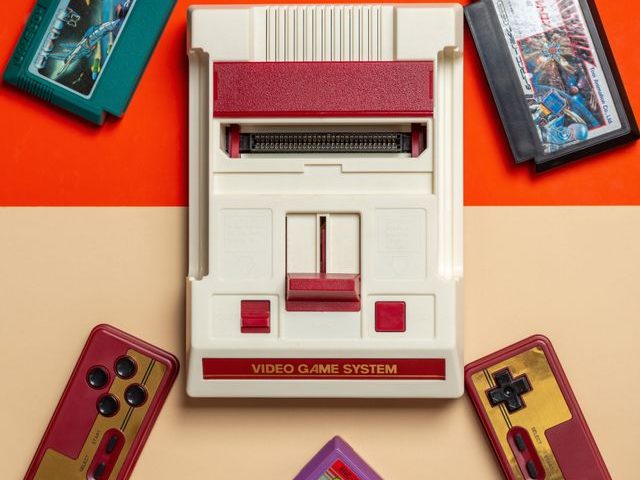
Cartridge audio routing – The Famicom’s cartridge slot included two specific pins that allowed the console to send its audio into the game cartridge, mix it with extra hardware on the game board itself, and send a massive, layered sound back out to the TV.
When Nintendo redesigned the console as the front-loading NES for the West, they completely cut those audio pins out of the 72-pin cartridge slot. This choice fundamentally changed video game history. Japanese game companies like Konami and Namco were building custom audio chips directly onto their Famicom boards, adding up to 8 extra sound channels for richer wave tables, extra square waves, and deep FM synthesis.
The most famous victim of this redesign was Castlevania III: Dracula’s Curse. The Japanese Famicom version used Konami’s custom VRC6 chip, adding three extra audio channels that gave the soundtrack booming, orchestral depth. Because the Western NES couldn’t handle expanded audio, the American version of Castlevania 3 had to be completely stripped down and forced back into the standard 5-channel limit, making it sound noticeably different.
Please come back for the next blog, where we will be covering more specifics on the Famicom’s audio capabilities. Part 2 (Coming October 26, 2026)