Chiptune Alchemy 4: 16-Bit Game Music & Composers
- Chiptune Alchemy
- Video game music
- Console audio hardware
- NES
- SNES
- Sega Genesis
· Aaron Lehnen
The 16-Bit Hall of Fame & Legacy Benchmarks
Welcome back to Chiptune Alchemy! In our last post, we broke down the contrasting architectures of the 16-bit console war—comparing the Sega Genesis’s biting FM synthesis with the Super Nintendo’s PCM sample engine.
Now, we’re putting theory into practice.
The 16-Bit Hall of Fame
To truly understand how these opposing sound architectures shaped video game history, you can’t just stop at the spec sheets—you have to listen to the games that defined them. Here are widely beloved peak soundtracks that prove just how far composers could push 16-bit hardware with total creative control.
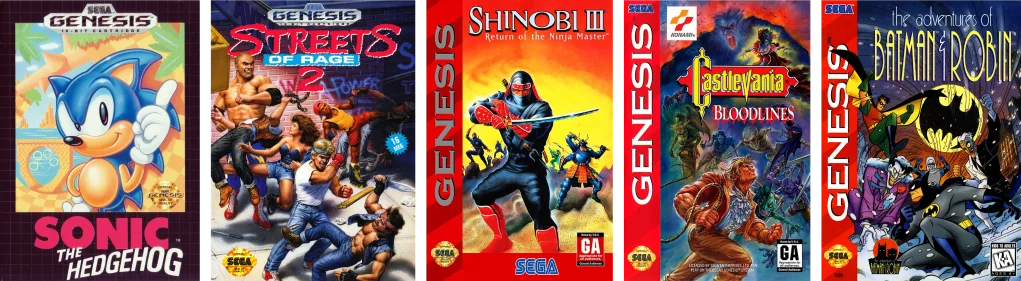
Sega Genesis (Mega Drive): FM Synthesis Benchmarks
- Sonic the Hedgehog 1 & 2(Masato Nakamura)
- The Hardware Trick: Dual-chip utilization (YM2612 + PSG) alongside heavy FM slap-bass programming.
- Why it matters: Nakamura used the YM2612’s sharp FM synthesis to craft pop-infused, bass-heavy grooves that defined the console’s identity. Tracks like Chemical Plant Zone push punchy synth-bass and complex FM arpeggios to their absolute limits, proving that the Genesis could produce radio-ready hooks on pure FM synthesis.
- Streets of Rage 2(Yuzo Koshiro & Motohiro Kawashima)
- The Hardware Trick: Custom-coded audio driver optimizing the YM2612 DAC sample channel for punchy 8-bit drum samples.
- Why it matters: A masterclass in club-ready house and techno on home console hardware. Koshiro famously programmed his own assembly-level audio driver to squeeze gritty, industrial, early-90s rave textures and deep sub-bass out of the Yamaha chip, producing one of the most celebrated electronic soundtracks in gaming history.
- Shinobi III: Return of the Ninja Master(Hiroshi Kawaguchi, Keisuke Tsukahara, et al.)
- The Hardware Trick: High-speed operator frequency modulation for metallic percussion and traditional instrumentation.
- Why it matters: Blends traditional Japanese motifs with aggressive 90s synth-rock. The soundtrack highlights the Yamaha chip’s natural ability to create biting, metallic lead instruments alongside slap-bass textures without choking the active FM channels.
- Castlevania: Bloodlines(Michiru Yamane)
- The Hardware Trick: FM wave-shaping for complex neoclassical harmonies and aggressive timbre.
- Why it matters: Yamane proved that FM synthesis wasn’t just for dance tracks. She used the Genesis’s raw, abrasive bite to build a dark, neoclassical gothic score that sounds noticeably more sinister, metallic, and aggressive than its SNES counterpart (Super Castlevania IV).
- The Adventures of Batman & Robin(Jesper Kyd)
- The Hardware Trick: Custom sound engine execution bypassing standard Sega drivers to force extreme FM modulation.
- Why it matters: Widely considered a technical impossibility on 16-bit hardware. Jesper Kyd bypassed standard sound drivers to produce relentless, heavy-pumping European hard techno with sub-bass frequencies and rapid-fire FM modulation that pushed the YM2612 far beyond its intended operational parameters.
Super Nintendo (SNES): PCM Sampling Benchmarks

- Chrono Trigger(Yasunori Mitsuda & Nobuo Uematsu)
- The Hardware Trick: Ultra-tight PCM loop point optimization within the 64KB SPC700 RAM buffer.
- Why it matters: Mitsuda nearly worked himself to exhaustion squeezing every byte out of the SPC700’s tiny 64KB memory pool. He achieved lush, organic-sounding acoustic guitars, metallic wind chimes, and sweeping woodwinds through clever sample loop points and dynamic stereo panning.
- Super Metroid(Kenji Yamamoto & Minako Hamano)
- The Hardware Trick: Heavy utilization of the SPC700’s built-in hardware DSP reverb and echo effects.
- Why it matters: An absolute masterclass in atmospheric audio design. Instead of standard melodies, the composers relied heavily on hardware-based DSP reverb, spatial delay, and heavily compressed, ambient choir samples to generate a suffocating, alien sense of isolation.
- Donkey Kong Country(David Wise)
- The Hardware Trick: Hardware pitch modulation combined with spatial stereo delay filters.
- Why it matters: David Wise unlocked the SPC700 like no one else. Tracks like Aquatic Ambience use pitch-modulated synth pads, dynamic stereo delay, and loop-optimized environmental samples (swirling wind, dripping water) to create a deeply immersive “ambient trance-step” experience.
- Final Fantasy VI (US III)(Nobuo Uematsu)
- The Hardware Trick: Multi-channel PCM synthesis simulating orchestral resonance and vocal formants.
- Why it matters: Uematsu managed to simulate an entire full-scale opera—complete with synthetic vocal performances—within a microscopic 64KB audio RAM footprint. The rich strings, brass, and timpani drums demonstrate how far PCM sampling pushed cinematic storytelling on home consoles.
- Super Castlevania IV(Taro Kudo & Masanori Adachi)
- The Hardware Trick: Real-time spatial reverb processing and muted frequency filtering.
- Why it matters: A showcase for early SNES sound capabilities. It eschews traditional 8-bit chip melodies in favor of eerie pipe organs, muted jazz bass, slaps, and extensive spatial reverb to create an uncanny, 3D-like acoustic environment.
Looking Back: The 8-Bit Foundations
Before 16-bit samplers and FM chips reshaped the landscape, composers were already pulling off wizard-level feats on the original 8-bit hardware. To truly appreciate how far audio engineering evolved, we have to look back at the 8-bit baseline—and how Japanese developers cheated those limits entirely with cartridge expansion chips.
Standard NES Soundtracks: Mastering the 5-Channel APU
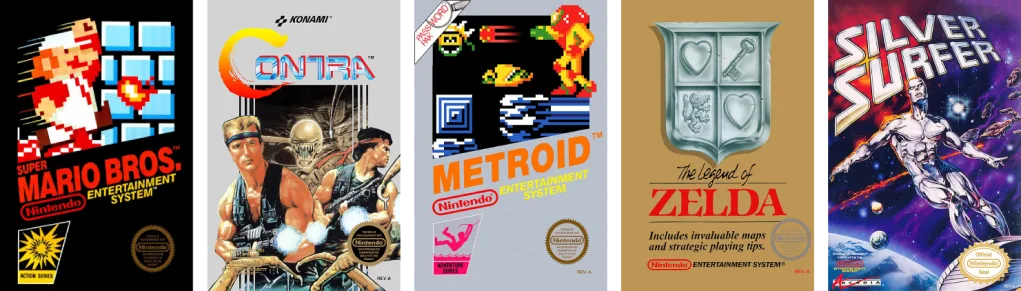
- Super Mario Bros.(Koji Kondo)
- The Hardware Trick: Dual pulse waves handling melodic counterpoint over triangle-wave bass.
- Why it matters: The gold standard for interactive game audio. Kondo crafted iconic, ragtime- to- tropical melodies using just two pulse channels, leaving the triangle wave for bass and the noise channel for snappy rhythm without overcrowding the audio space.
- Contra(Hidenori Maezawa & Kiyohiro Sada)
- The Hardware Trick: High-speed pulse wave arpeggios simulating polyphonic guitar chords.
- Why it matters: Pushes energetic, high-tempo arcade rock through limited hardware. High-speed software arpeggios recreate the illusion of rhythmic, distorted guitar chords on a single pulse channel, showing how much raw energy could be squeezed out of standard geometric waves.
- Metroid(Hirokazu “Hip” Tanaka)
- The Hardware Trick: Dissonant wave intervals paired with erratic white-noise rhythmic patterns.
- Why it matters: Tanaka purposefully avoided cheerful melodies, utilizing dissonant wave intervals and rhythmic noise patterns to make players feel lost and uneasy, establishing sci-fi atmospheric minimalism on early console hardware.
- The Legend of Zelda(Koji Kondo)
- The Hardware Trick: Low-frequency triangle wave basslines supporting multi-octave pulse leads.
- Why it matters: Demonstrates the power of majestic, open-air melodies. Kondo used the triangle wave channel for deep, driving bass motifs while maintaining clear counterpoint harmonies across the remaining pulse channels.
- Silver Surfer(Tim Follin & Geoff Follin)
- The Hardware Trick: Software-driven mid-frame register swaps altering pitch, duty cycle, and volume dynamically.
- Why it matters: Widely regarded as a programming miracle. Tim Follin used high-speed assembly code to alter duty cycles and volume mid-frame, forcing the standard NES chip to play complex progressive rock, sweeping arpeggios, and multi-instrument lines that sounded like a full synthesizer setup.
Famicom Expansion Audio: The Cartridge Upgrade Advantage
While Western NES consoles were restricted to the standard 5-channel APU, the Japanese Famicom featured hardware expansion pins built directly into the cartridge slot. Japanese developers wired custom sound chips straight into the game cartridges, producing arrangements that completely outclassed their Western counterparts.
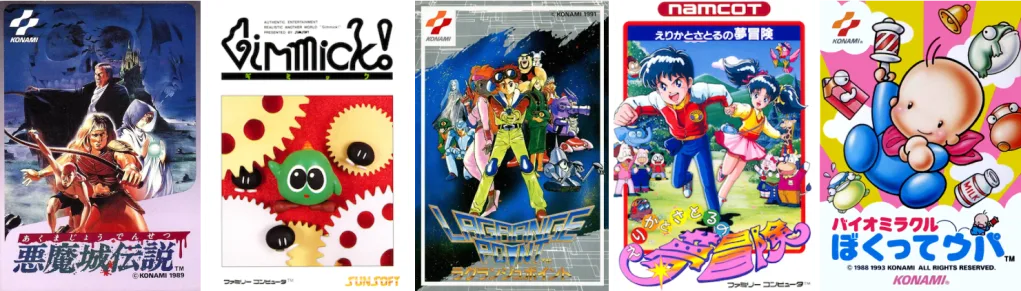
- Akumajou Densetsu / Castlevania III: Dracula’s Curse(Konami VRC6 Chip)
- The Hardware Trick: Konami VRC6 coprocessor adding 3 extra channels (2 pulse waves + 1 sawtooth wave).
- Why it matters: The Japanese release added Konami’s custom VRC6 coprocessor. Tracks like Beginning sound like an entirely different, richer arrangement with thick, synth-like chord progressions and sawtooth basslines that were completely flattened on the standard 5-channel Western NES release.
- Gimmick!(Sunsoft 5B Chip)
- The Hardware Trick: Integrated Yamaha YM2149 sound processor providing 3 extra programmable sound channels.
- Why it matters: Sunsoft included a dedicated Yamaha sound chip right on the cartridge, giving composer Masashi Kageyama 8 channels in total. The resulting soundtrack features incredibly detailed, bass-rich jazz-fusion melodies and bouncy basslines unmatched by standard 8-bit games.
- Lagrange Point(Konami VRC7 Chip)
- The Hardware Trick: Built-in FM synthesis coprocessor (YM2413 derivative) adding 6 FM channels.
- Why it matters: The only Famicom game to feature an actual FM synthesis sound chip inside the cartridge. Providing 6 channels of full FM synthesis on top of the standard APU, the score sounds far closer to a Genesis game or a Japanese PC-88 computer than a standard 8-bit console.
- Erika to Satoru no Yume Bouken(Namco N163 Chip)
- The Hardware Trick: Custom wavetable sound chip offering up to 8 extra programmable wavetable channels.
- Why it matters: Namco’s N163 chip expanded the Famicom’s capabilities into true wavetable synthesis. Composer Hiroyuki Kawada used the extra polyphony to construct delicate, multi-part classical contrapuntal harmonies and lush arrangements that would choke a standard NES.
- Bio Miracle Bokutte Upa(Famicom Disk System – FDS)
- The Hardware Trick: Custom RAM adapter audio circuit providing an additional configurable wavetable channel.
- Why it matters: The Famicom Disk System hardware contained an extra custom wavetable channel. Rather than harsh geometric pulse waves, Upa’s soundtrack uses smoothly shaped custom wavetables to play soft, bell-like leads and warm, smooth bass tones that give the music a far more polished texture.
Closing Thoughts & What’s Next
From mathematical FM operators and 64KB sample pools to custom cartridge expansion chips, the 8-bit and 16-bit eras proved that strict engineering limits don’t stifle musical creativity—they demand it. Composers didn’t just write background tunes; they programmed living, breathing acoustic signatures that defined entire console generations.
Thank you for joining me on this deep dive into hardware architecture!
Coming Up in Part 5: We will be looking at the lesser-known Sega Master System that was the original Nintendo rival, as well as the Genesis add-ons of the 32X & Sega/Mega CD and how their audio worked, and a top-5 OST listen recommendations for each of these systems.
Reimagining the Classics: Chiptune Meets Modern Genres
Understanding the engineering limits of these chips is one thing—hearing how these composition frameworks translate into modern musical styles is another.
If you enjoy these iconic soundtracks and want to hear a modern reimagining of these classic franchise melodies through Prog Metal, Synthwave, Reggae, Rock, EDM, and other genre lenses, here is a showcase of my own cover arrangements:
8-Bit Reimagining (24)
My takes on familiar NES and arcade soundtracks.
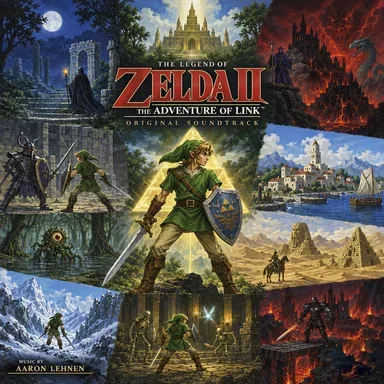 Zelda 2: The Adventure Of Link
Browse 16 tracks
- Link's Eternal Quest Continues (Title Theme)
- A New Adventure Begins Overworld
- Deep Into Candlelit Caves
- Hyrulean Treasures
- Healers Of Hyrule
- Surprise! Another Battle
- Leveled Up
- Traversing The Palaces
- The Bosses' Chambers
- The Crystal Altars
- House Of Error
- The Great Palace
- Final Boss: Dark Link
- Triforce Of Courage Obtained
- Princess Zelda Awakens
- Ending Credits
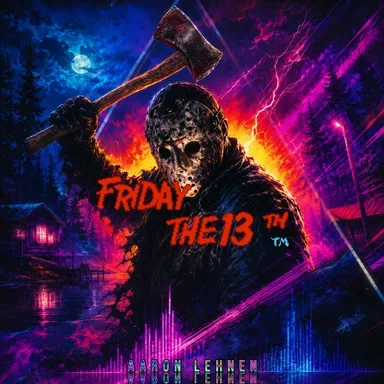 Friday The 13th (NES Soundtrack)
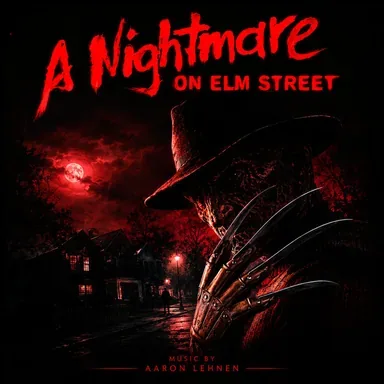 Nightmare On Elm Street (NES Soundtrack)
Browse 18 tracks
- Nightmare On Elm Street Title Theme
- Town Of Elm Street
- House 1
- House 2
- House 3
- Basement 1
- Freddy Krueger Incarnations' Boss Battles
- Junkyard
- Cemetary
- Freddy's Crack House (Unused in NES Game)
- Elm High School
- Basement 2
- Falling Asleep
- 1..2.. Freddy's Coming For You!!
- Freddy
- Wake Up Radio
- The End - Freddy Is Dead...
- Game Over
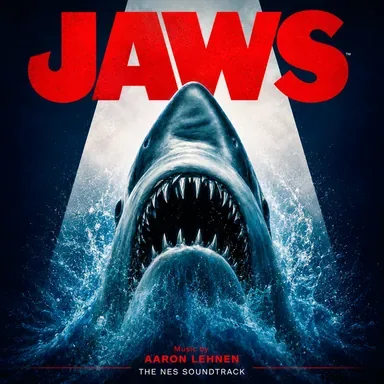 Jaws (Extended Soundtrack)
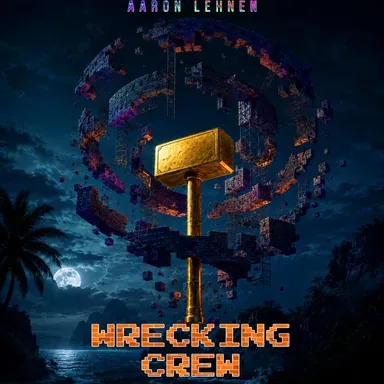 Wrecking Crew
 T & C Surf Designs - Wood & Water Rage
Browse 5 tracks
 R.C. Pro-Am
 Color A Dinosaur (NES)
Browse 4 tracks
 Galaga
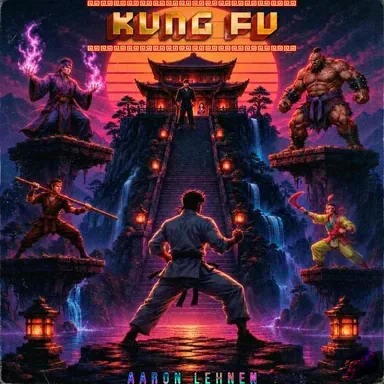 Kung Fu: Five Floors of Fury
Browse 10 tracks
- Opening The Pagoda
- Floor 1: The First Flight (Boss: Stick Fighter)
- Floor 2: The Snake Trap (Boss: Boomerang Thrower)
- Floor 3: The Big Brawl (Boss: Giant)
- Floor 4: The Mystic Hall (Boss: Magician)
- Floor 5: The Penthouse Showdown (Boss: Mr. X)
- Boss Battles (General Mandate Arrangement)
- Stage Cleared & Bosses Defeated
- Saving Sylvia
- Game Over
 DuckTales: Riches, Relics, & Moonlight
Browse 17 tracks
- Title Theme (NES)
- Map Room Land Select
- Level Intro
- Jungle (The Amazon)
- Invincibility
- Ghost House (Transylvania)
- Boss Battles
- Treasure Acquired & Level Completed
- Underground (African Mines)
- Lose Life
- Game Over
- Snow Mountain (The Himalayas)
- Launchpad - Gyro Bonus
- The Moon Surface
- Bonus Track: DuckTales Cartoon Theme
- Bonus Track: Transylvania (Prototype)
- Bonus Track: DuckTales Theme Alt Take
 Super Mario Bros. 2: Panic in Subcon
 Super Mario Bros. 3: All The Worlds Staged (Double Album)
Browse 41 tracks
- World 1 - Grass Land
- Overworld
- Cursed King's Throne Room
- Airship
- World Conquered King Restored
- World 2 - Koopahari Desert
- Underground
- World 3 - Sea Side
- Under Waterworld
- Got A Card! Fireworks Fanfare
- Music Box
- World 4 - Big Island
- Hammer Bros.
- Fortress
- Fortress & Airship Bosses - Koopa's Kids & Boom Boom.wav
- World 5 - The Sky
- Athletic
- Course Cleared
- Toad's House
- Super Star Power
- World 6 - Iced land
- Miss Lost Life
- Game Over
- Whistle To Warp Island
- World 7 - Pipe Maze
- N-Spade Memory & Slots
- World 8 - Dark Castle Of Koopa
- Bowser, King of Koopas.
- Ending & Credits
- Overworld (Sped Up)
- Under Waterworld (Sped Up)
- Athletic Theme (Sped Up)
- Hammer Bros. (Sped Up)
- Super Power Star (Sped Up)
- Toad's House (Sped Up)
- Underground (Sped Up)
- Warp island/Coin Heaven (Sped Up)
- Fortress (Sped Up)
- Koppa Kids & Boom Boom (Sped Up)
- Airship (Sped Up)
- Bowser, King Of Koopas (Sped Up)
 Super Mario Bros.
Browse 17 tracks
- Overworld Ground Theme
- Level Complete
- Underground Tunnels
- Death, Player Down
- 1UP
- Underwater Swim Theme
- StarMan Invincibility
- Koopa's Castle
- Princess Is In Another Castle
- Ending
- Warning
- Overworld Ground Theme (Hurray, Sped Up)
- Underground Tunnels (Hurray, Sped Up)
- Underwater Swim Theme (Hurray, Sped Up)
- StarMan Invincibility (Hurray, Sped Up)
- Koopa's Castle (Hurray, Sped Up)
- Game Over
 CastleVania 2: Simon's Quest
 CastleVania: First Blood
 Teenage Mutant Ninja Turtles (NES): Return of the Ooze
Browse 18 tracks
- Introduction Title Theme
- Level 1 Theme Overworld
- Underworld Sewers
- Difficult Fight Mini-Boss
- Level Clear
- Level 2 Theme Dam
- Turtle Captured
- Underwater Scene
- Hurry! PANIC!! Dam Explodes
- Game Over
- Level 5 Theme/Base
- Base Underworld Caverns
- Main Boss Shredder
- Shredder Defeated
- Epilogue
- (Bonus) Movie Theme - Turtle Rhapsody
- (Bonus) TMNT Cartoon Theme
- (Bonus) TMNT Cartoon Theme (Instrumental)
 Chiptune 'N Dale Retro Rangers (NES OST)
Browse 20 tracks
- Chip 'n Dale Title Theme
- Zone 0
- Bonus Zone
- Zone A, C, E
- Overworld Map
- Zone B
- Power Up
- Zone D
- Death
- Zone F, H I
- Game Over
- Zone G
- Zone Clear
- Zone J
- Boss Theme
- Ending
- (Bonus Track) Cartoon Title Theme - Rock Version
- (Bonus Track) Cartoon Title Theme - Rock Instrumental Version
- (Bonus Track) Zone J - Rock Version
- Retro Rangers Medley SloWave Remix
 Punch-Out: Round 1
Browse 22 tracks
- Punch-Out Theme (Introduction)
- Round Begins
- Fight!!
- Glass Joe
- Von Kaiser
- Winning
- Won Match
- Title Bout
- Piston Honda
- New Champ!
- Training Montage
- Don Flamenco
- King Hippo
- Get Up, Mac!!
- Lost Match
- Game Over
- Soda Popinski
- World Champion
- The Dream Fight!!
- Punch-Out Theme (Reprise)
- [Bonus Track] Fight Remix
- [Bonus Track] Super Punch-Out!! 8-Bit Demix
 Life Force: Phoenix Ascends
 Super Dodge Ball (NES) OST: Dodge This!
 The Legend of Zelda
 Contra (NES): Metal Reincarnated
Browse 14 tracks
- Title Theme (Extended)
- Story Introduction (JP)
- Area 2 - Inside Enemy Base 1
- Area 3 - Waterfall
- Area 4 - Inside Enemy Base 2
- Boss Battle: Core Of The Enemy
- Area Clear
- Area 5 - Snow Field
- Area 6 - Energy Zone
- Area 7 - Hangar
- Area 8 - Alien's Lair
- Alien Dead - All Clear
- Ending/Credits
- *Bonus Track*: Area 1 - Jungle (Alien Jungle Remix)
 Metroid
16-Bit Reimagining (3)
From the Genesis to the SNES, these melodies still have plenty of places to go.
 Super Mario All-Stars: Dreams, Kingdoms & Super Stars
Browse 93 tracks
- Presents - Logo Jingle (Deluxe)
- All-Stars Title Theme (Deluxe)
- Screen Up & Down (Deluxe)
- Game Select (Deluxe)
- SMB1 - Title (Deluxe)
- SMB1 - Overworld Ground Theme (Deluxe)
- SMB1 - Level Complete
- SMB1 - Tunnel Transition
- SMB1 - Underground Tunnels (Deluxe)
- SMB1 - Death, Player Down (Deluxe)
- SMB1 - Game Over (Deluxe)
- SMB1 - 1UP
- SMB1 - Bonus Game (Deluxe)
- SMB1 - Underwater Swim Theme (Deluxe)
- SMB1 - StarMan Invincibility (Deluxe)
- SMB1 - Koopa's Castle
- SMB 1 - King Koopa's Clones (Deluxe)
- SMB1 - The Princess Is In Another Castle (Deluxe)
- SMB1 - Final King Koopa (Deluxe)
- SMB1 - Ending (Deluxe)
- Lost Levels - Title (Deluxe)
- Lost Levels - Ending (Deluxe)
- SMB2 - Intro Title Theme (Deluxe)
- SMB2 - Please Select Player (Deluxe)
- SMB2 - Overworld
- SMB2 - Birdo & Other Boss Battles
- SMB2 - Boss Victory
- SMB2 - Underworld
- SMB2 - World Course Clear
- SMB2 - Miss/Lose
- SMB2 - Game Over
- SMB2 - Bonus Chance (Deluxe)
- SMB2 - Sub-Space Potions (Deluxe)
- SMB2 - Warp (Deluxe)
- SMB2 - Power-Up Fanfare (Deluxe)
- SMB2 - Secret Stars (Deluxe)
- SMB2 - Final Boss - Wart (Deluxe)
- SMB2 - Ending (Deluxe)
- SMB3 - Title (Deluxe)
- SMB3 - World 1: Grass Land
- SMB3 - Overworld (Deluxe)
- SMB3 - Cursed King's Throne Room
- SMB3 - Airship
- SMB3 - World Conquered King Restored
- SMB3 - World 2: Koopahari Desert
- SMB3 - Underground
- SMB3 - World 3: Sea Side (Deluxe)
- SMB3 - Under Waterworld
- SMB3 - Music Box (Deluxe)
- SMB3 - Got A Card! Fireworks Fanfare
- SMB3 - World 4: Big Island (Deluxe)
- SMB3 - Hammer Bros. (Deluxe)
- SMB3 - Fortress
- SMB3 - Fortress & Airship Bosses: Koopa's Kids & Boom Boom
- SMB3 - Princess Letters (Deluxe)
- SMB3 - World 5: The Sky
- SMB3 - Athletic
- SMB3 - Course Clear Fanfare (Deluxe)
- SMB3 - Toad's House
- SMB3 - Super Star Power (Deluxe)
- SMB3 - World 6: Iced land
- SMB3 - Miss Lost Life
- SMB3 - Game Over
- SMB3 - Whistle Sound ~ Warp Island (Deluxe)
- SMB3 - World 7: Pipe Maze
- SMB3 - N-Spade ~ Nervous Breakdown
- SMB3 - Bonus Win (Deluxe)
- SMB3 - Bowser Message (Deluxe)
- SMB3 - World 8: Dark Castle Of Koopa
- SMB3 - Bowser, King of Koopas.
- SMB3 - Chamber Opened (Deluxe)
- SMB3 - Ending (Deluxe)
- Warning
- SMB1 - Overworld Ground Theme (Hurry, Sped Up - Deluxe)
- SMB1 - Bonus Game (Hurry, Sped Up - Deluxe)
- SMB1 - Underground Tunnels (Hurry, Sped Up - Deluxe)
- SMB1 - Underwater Swim Theme (Hurry, Sped Up - Deluxe)
- SMB1 - StarMan Invincibility (Hurry, Sped Up - Deluxe)
- SMB1 - Koopa's Castle (Hurry, Sped Up)
- SMB1 - King Koopa's Clones (Hurry, Sped Up - Deluxe)
- SMB1 - Final King Koopa (Hurry, Sped Up - Deluxe)
- SMB3 - Overworld (Hurry, Sped Up - Deluxe)
- SMB3 - Airship (Hurry, Sped Up)
- SMB3 - Underground (Hurry, Sped Up)
- SMB3 - Under Waterworld (Hurry, Sped Up)
- SMB3 - Athletic (Hurry, Sped Up)
- SMB3 - Toad's House (Hurry, Sped Up)
- SMB3 - Warp Island/Coin Heaven (Hurry, Sped Up - Deluxe)
- SMB3 - Hammer Bros. (Hurry, Sped Up - Deluxe)
- SMB3 - Fortress (Hurry, Sped Up)
- SMB3 - Fortress & Airship Bosses: Koopa's Kids & Boom Boom (Hurry, Sped Up)
- SMB3 - Super Star Power (Hurry, Sped Up - Deluxe)
- SMB3 - Bowser, King of Koopas (Hurry, Sped Up)
 Chrono Trigger - Fragments of Time (EP)
 Sonic The Hedgehog (Genesis Extended)
Browse 30 tracks
- Intro/Title Theme (SEGA)
- Green Hill Zone (Act 1)
- Green Hill Zone (Act 2)
- Green Hill Zone (Act 3)
- Marble Zone (Act 1)
- Marble Zone (Act 2)
- Marble Zone (Act 3)
- Act Clear
- Special Stage
- Chaos Emerald
- Spring Yard Zone (Act 1)
- Spring Yard Zone (Act 2)
- Spring Yard Zone (Act 3)
- Labyrinth Zone (Act 1)
- Labyrinth Zone (Act 2)
- Labyrinth Zone (Act 3)
- Drowning (I Can't Breath)
- Continue or Game Over?
- 1-Up (Extra Life)
- Invincibility (Try me)
- Star Light Zone (Act 1)
- Star Light Zone (Act 2)
- Star Light Zone (Act 3)
- Dr. Robotnik Theme (Boss Battle Egghead)
- Scrap Brain Zone (Act 1)
- Scrap Brain Zone (Act 2)
- Scrap Brain Zone (Act 3)
- Final Zone, Final Robotnik
- Ending Theme - All Complete
- Credits (End)
Original game soundtracks (8)
Music I composed for games, including NES homebrew and VR projects.
 Eschaton: Battle For Eternity (Vol.1)
Browse 11 tracks
- Title Theme
- Level 1 - The Mission
- Level 1 Boss - Mothership Z
- Level 2 + Boss - Cosmic Crimson Cobalt
- Level 3 - Fantasy Gravity
- Level 3 Boss - Piranha Dragons
- Level 4 + Boss - Odyssey Of The Space Leviathan
- Level 5 - Battle For The Galaxy
- Level 5 - Final Boss Elohssa
- Ending Credits - Hero Of Tomorrow
- Game Over
 CUBE (NES Soundtrack)
 Orchstral Cube
Browse 11 tracks
 Android Scavengers (Game Soundtrack)
 We Are Darkness (VR Game Soundtrack)
 Expedition Aurora (VR Game Soundtrack)
 Elemental Runes (Game Soundtrack)
Browse 9 tracks
 Underwater Chronicles (Game Soundtrack)
Game music compilations (2)
Game themes collected across different worlds and consoles.
 Splash (Water Themed VGM Compilation)
Browse 13 tracks
- Wave Race 64 - Title Theme
- Vectorman - Tidal Surge
- T & C Surf Designs - Wood & Water Rage (NES)
- Sonic 3 - Hydrocity Act 2
- Mega Bomberman - Slammin' Sea
- Mega Man 2 - Bubble Man
- TMNT (NES) - Underwater Theme
- Donkey Kong Country - Aquatic Ambience
- LoZ: Ocarina of Time - Zora's Domain
- Super Adventure Island - Drop Into A Walk
- Kirby's Dream Land - Float Islands
- Knuckles' Chaotix - Seascape (Marina Madness Theme)
- Plok! - Beach
 Under The Covers: 12 Nights of Horror
A film-and-game collection; the game tracks are listed here.
Browse 2 tracks
Game singles and arrangements (11)
Standalone releases, including alternate arrangements.
 Sonic Adventure 2: Stage 1 - City Escape (Escape from the City)
 Legacy Of The Wizard - Opening Theme
 DOOM - E3M1 (Mouth For War)
 Batman (NES) - Underneath The City (Stage 3)
 Street Fighter 2 - Sagat Theme (Metal Version)
 Ninja Gaiden - Unbreakable Determination (Act 4 Scene 2)
 T & C Surf Designs - Wood & Water Rage (NES)
 TMNT Underwater Theme (NES)
 Nightmare on Elm Street Theme (NES - Metal Arrangement)
 Silent Hill Promise (Reprise)
- We Are Darkness (VR Game Soundtrack) — Cinematic Orchestral Collection
Original music with a retro game connection (5)
Original pieces drawing on game music, chiptune sounds, and retro imagery.
 [8-Bit] Aurora (Pre-Evolution)
Browse 12 tracks
- Intro: InterDimensional [8-Bit]
- Liquid Galaxy [8-Bit]
- Psycho-Tropic Nebulae [8-Bit]
- Along The Cosmic Nile [8-Bit]
- East Sky [8-Bit]
- Celestial Romance [8-Bit]
- Wormhole [8-Bit]
- Solar Solace [8-Bit]
- Anti-Matter Aurora [8-Bit]
- Edge Of Space/Time [8-Bit]
- Outro: Exit... The Holographic Universe [8-Bit]
- Bonus: Secret Universe [8-Bit]
 Living Planet Nocturne
 Rapid Rhapsody
 The Adventurer
 Atari
An original single, rather than a game soundtrack cover.
Alongside the covers, you’ll find my original game scores and game-inspired pieces below. Choose “Listen here” to play an album or song while you read. 53 releases in all.
More of my music on Bandcamp ↗