Horror at the Controls: Part 8 — The Thing
- Horror at the Controls
- Horror films
- Horror games
- PlayStation
- The Thing
- Predator
· Aaron Lehnen · 9 min read
Trust, paranoia, and the horror of a negative blood test.
You have tested your companion. The result says human. A few moments later, something bursts out of the person standing beside you.
That can be a frightening surprise. It can also make a player wonder why they bothered learning the rules.
The difference is central to The Thing as a game. John Carpenter's film is terrifying because the characters cannot reliably establish whom to trust. An interactive adaptation has to make that uncertainty feel meaningful without making every precaution pointless.
The 2002 game attempted an unusually ambitious answer: companions with fear, trust, useful skills, and the possibility of infection. Its 2024 remaster returned to a problem that had troubled that answer for more than twenty years.
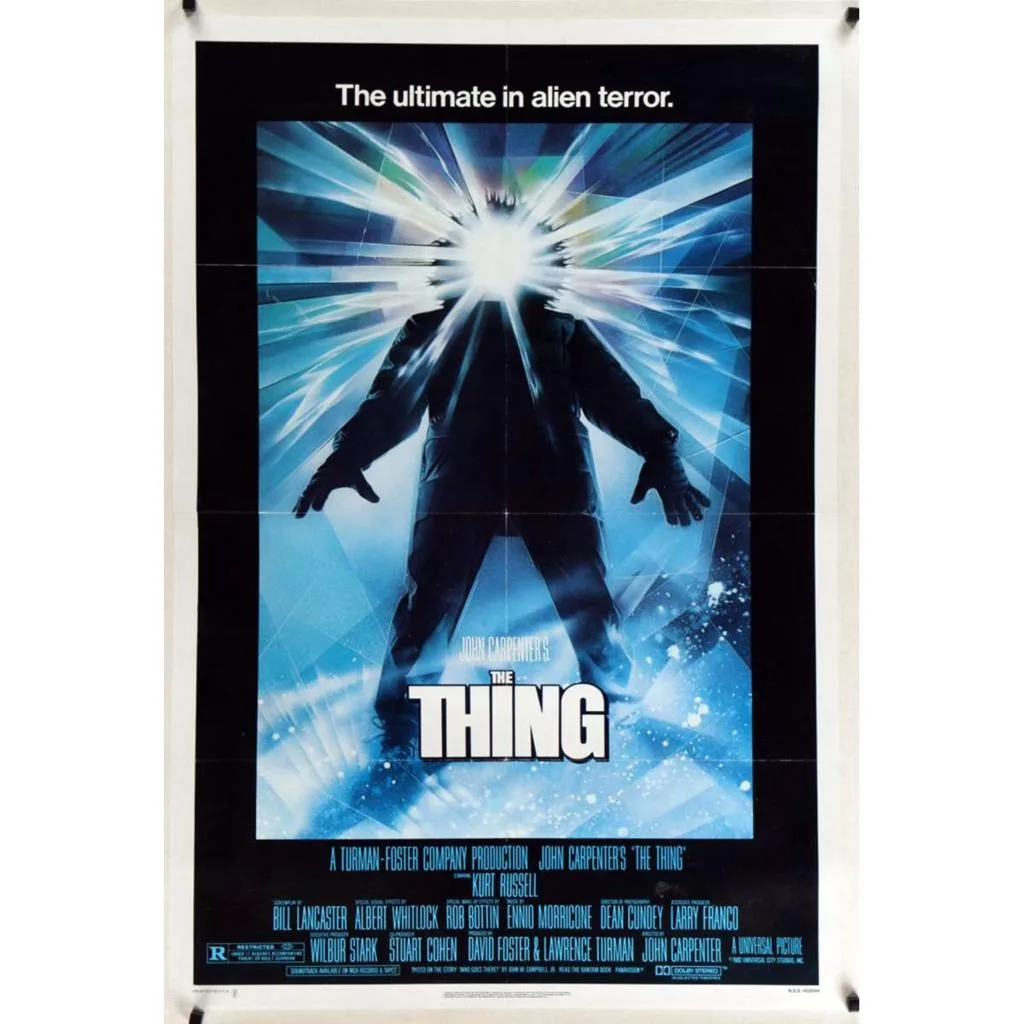
The monster has no reassuring shape
Carpenter's 1982 The Thing draws on a story already adapted for the screen in 1951, but its particular combination of isolation, imitation, and grotesque transformation gives it a distinctive identity.
At an Antarctic research station, an alien organism can imitate the people it consumes. The weather makes simply leaving difficult. The survivors need one another while lacking a dependable way to know whom they are standing beside.
The creature effects are spectacular, but the quieter uncertainty is just as important. A person may appear normal. A familiar voice may no longer belong to the person you knew. Even apparent cooperation can be an opportunity for the threat to spread.
The blood-test sequence gives the problem a temporary procedure. Evidence can be obtained, but obtaining it is itself dangerous. The test matters because the film asks the audience to understand what it would prove.
For games, that is fertile ground. Information, cooperation, and limited resources can all become rules. The danger is that the rules must remain convincing once the player starts using them deliberately.
2002: return to Outpost 31
The Thing · Computer Artworks · PlayStation 2, Xbox, Windows
The game continues beyond the film's events rather than simply asking the player to reenact them. Captain J. F. Blake leads an investigation into the Antarctic disaster, encountering hostile creatures, damaged facilities, and people who may or may not remain trustworthy.
That gives the designers freedom to build a playable expedition. The player can discover consequences of the film while meeting a new cast whose fate is not already fixed in the audience's memory.
The familiar setting creates immediate expectations. An abandoned room is evidence of something, but not necessarily the thing the player first assumes. Another survivor is a potential source of help and a possible route for infection.
This is a stronger foundation than treating the license as permission to fill a snow-covered corridor with ordinary enemies. The world itself has a reason for every human relationship to become uncertain.
The actual game is also a combat adventure, with weapons, routes, tasks, and increasingly large creatures. Its special contribution lies in trying to make the people assisting with those tasks more than obedient extensions of the player's inventory.
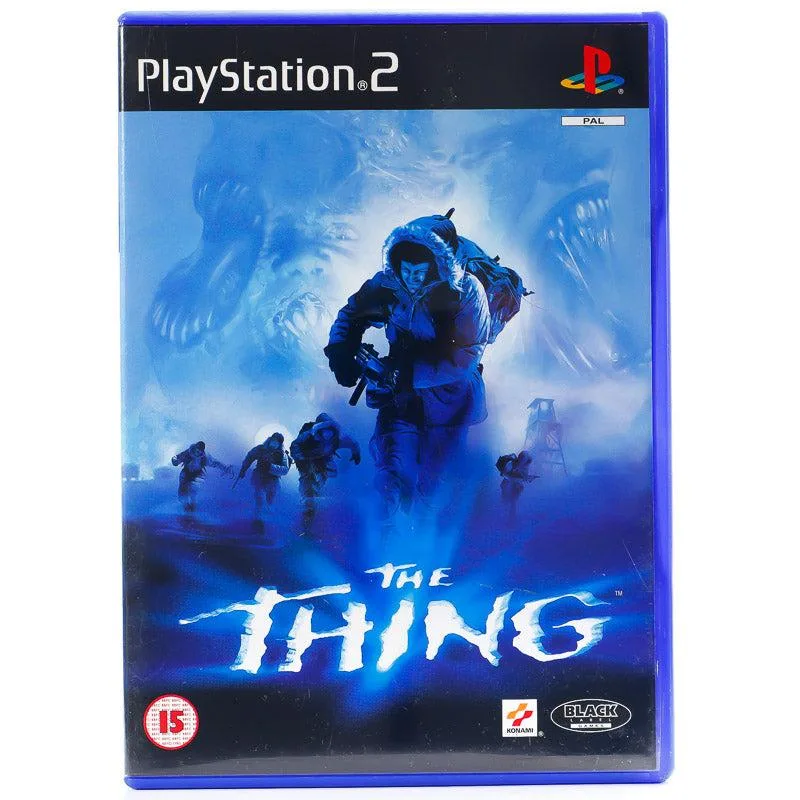
Trust: your companions are judging you too
Many squad games assume that allies will follow a reasonable command simply because the player issued it. The Thing adds another condition: do they trust Blake enough to cooperate?
Supplying equipment, acting predictably, and demonstrating that you are not the threat can influence that relationship. Suspicion is not reserved for the people the protagonist meets. They have reasons to be suspicious of the protagonist as well.
That is an excellent translation of the film's social problem. The player may know whose body they control, but the characters inside the world do not have access to the same reassurance.
It also complicates resource allocation. Handing over a useful weapon can improve cooperation while reducing what Blake retains. Trust requires an action with practical consequences, rather than selecting a friendly line from a dialogue menu and waiting for a meter to rise.
The idea becomes especially effective when an ally has something the team needs. Their willingness to help can determine more than the number of guns pointing in the right direction.
Fear: a useful person may be unable to help
Fear is related to trust without being identical to it. A companion can believe Blake is human and still become too frightened to function normally.
That distinction makes the squad more believable. Confidence in a leader does not erase the effect of seeing something impossible happen to another person. Moving into a more disturbing area can therefore change the state of the team even before another fight begins.
For the player, the consequence is another responsibility. Survival is not just a matter of protecting a health bar. Keeping people capable of acting can matter as much as keeping them technically alive.
The systems also invite an unpleasant calculation. Do you move a frightened specialist toward the next objective because their skill is needed, or stop and try to stabilize the group? Is that delay safer than continuing while the team is close to losing control?
Those are appropriate questions for The Thing. The film's people are not always ineffective because they lack knowledge. They are exhausted, frightened, and increasingly unable to cooperate.
Engineers, medics, and soldiers make dependence practical
The squad's different roles give those psychological systems something to act upon. An engineer can help with damaged systems; a medic can support injured people; soldiers contribute to protection.
A companion is therefore not just another person whose eventual transformation would create a dramatic scene. They can be necessary to what the player is trying to accomplish next.
That makes suspicion inconvenient in exactly the right way. Refusing to rely on anyone might seem emotionally safer, but it can leave the expedition unable to solve its practical problems.
The best version of this arrangement forces uncertainty to coexist with need. You cannot simply treat everyone as an enemy and remain equally effective. The person you are unsure about may be the person who can open the route out.
This is what gives the game a continuing claim on attention despite its age and rough edges. It attempted to make trust part of an action game's material structure, rather than a theme mentioned only in cutscenes.
The blood-test problem
The original game's most notorious contradiction involved scripted transformations. Players could obtain reassurance through a test and then see the apparently uninfected person transform because the adventure required a particular event.
From a production perspective, scripted changes can keep a story moving and guarantee the encounters a level was designed to contain. From the player's perspective, they can undermine the evidence on which decisions depend.
That is not the same thing as making infection frightening. If careful behavior and testing cannot affect an outcome that appears to belong to the system, the player starts learning a different lesson: the interface is not worth believing.
The problem is especially damaging in this franchise. The Thing depends on uncertainty about people, but uncertainty is interesting only while investigation and precautions remain capable of changing what you know or what happens next.
A test need not guarantee permanent safety. Someone could be infected later. But that later change needs an intelligible relationship with the world, rather than functioning as a surprise the rules had no way to prevent.
Creatures are easier to fight than uncertainty
The combat side presents another challenge. The film's organism can take grotesquely unfamiliar forms, while an action game needs enemies the player can perceive, react to, and eventually defeat.
Small scuttling threats, human-sized creatures, and larger encounters make practical sense inside a campaign. They provide variety and give weapons a reason to exist. But each repeated form also becomes a category the player understands.
That is the cost of turning the unknowable into a combat system. Once an enemy has familiar attacks and a dependable response, it becomes a task rather than a mystery.
The squad systems help resist that reduction. Even when the player understands how to fight a visible creature, the people beside them can remain a separate concern. The monster in front of you and the person behind you need not present the same kind of problem.
The game is strongest when those pressures overlap rather than allowing ordinary firefights to replace the more distinctive social horror.
2024: the remaster returns to the rules
Nightdive's The Thing: Remastered brings the 2002 adventure to modern platforms with visual improvements, updated presentation, achievements, and quality-of-life work. Its most interesting change is not simply a sharper image of an old creature.
In a developer interview, original director and programmer Mark Atkinson and Nightdive engineer Josh Dowell described removing scripted burst-outs of previously uninfected companions. The revised system ties infection to direct contact with Thing creatures instead.
That is a significant correction because it restores a reason to care about what has happened to the people in your squad. Exposure can have consequences, and avoiding it can matter.
It does not turn the campaign into an unlimited simulation of Carpenter's film. The remaster remains an action-horror game built around the original adventure. But a remaster can improve the relationship between a system's promise and its behavior without discarding the game that contained it.
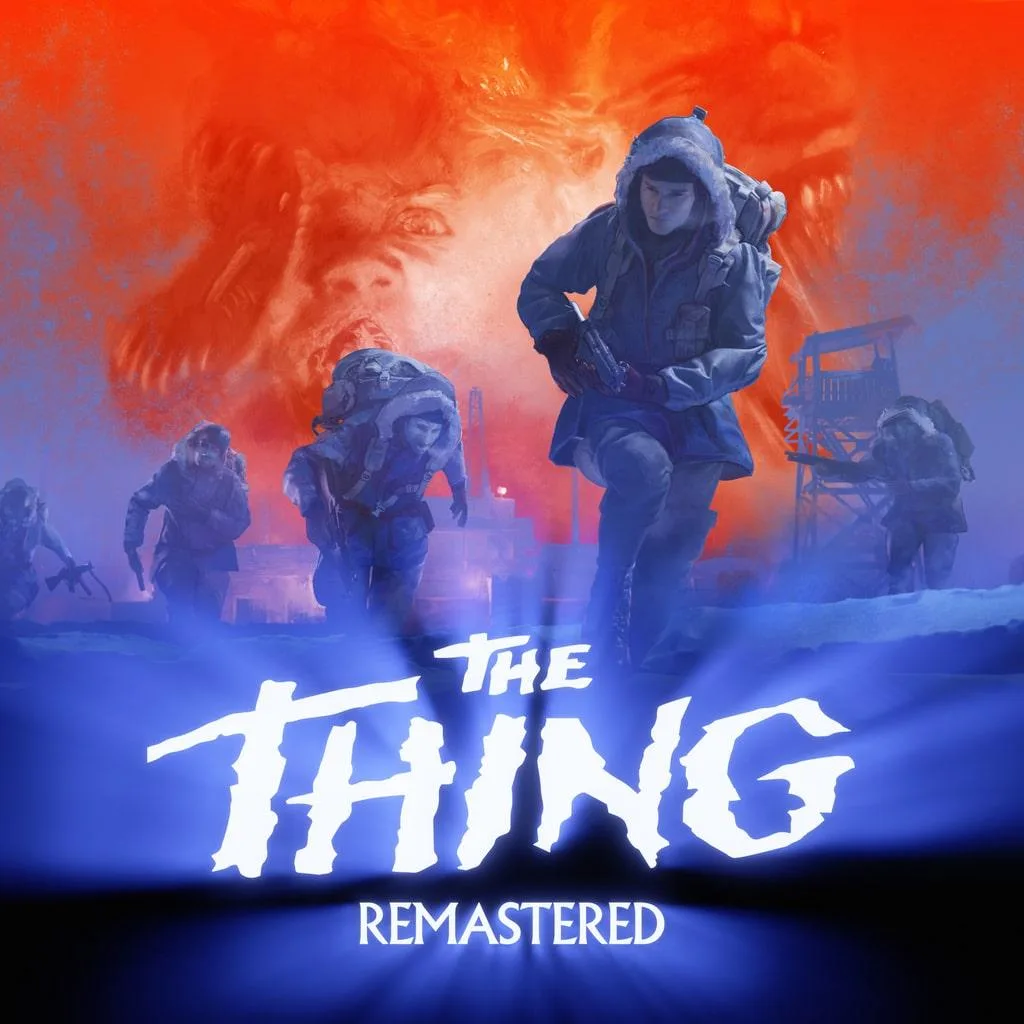
Preservation can include repair
There is an interesting tension in revisiting an older game. Preserving every awkward decision may retain historical accuracy while also preserving a problem that obscured what the designers wanted to achieve.
Changing too much can make a different work. Changing a contradiction that prevented a central mechanic from making sense can make the original idea easier to understand.
The infection correction is a strong example of the latter. The remembered flaw and the original design ambition belong to the same history; explaining the change preserves that relationship better than pretending either version was the only one that existed.
Access matters too. A modern release makes it easier to encounter an unusual design without first finding functioning old hardware and a suitable copy. Preservation is not only a question of whether files exist somewhere. It is also a question of whether people can meaningfully experience the work.
What a new Thing game could learn
An even more investigation-led adaptation could make cooperation, evidence, and concealed infection central from the beginning. The challenge would be to let a player form useful suspicions without turning every encounter into a solved checklist.
Different characters might know different things. A convincing explanation could still be incomplete. A necessary task might require trusting someone before you have enough evidence to feel comfortable.
Those are possibilities rather than claims about an announced project. They show why the 2002 game's ideas remain interesting even where its campaign could not fully realize them.
The crucial principle is simple: the player's uncertainty should concern the fictional world, not whether the game's rules are going to be ignored.
A negative test can stop being reassuring if something happens afterward. It should not stop being meaningful just because a script has reached its next cue.
That distinction is what makes The Thing such a revealing adaptation. The monster can imitate almost anything. The design needs to be rather more honest.
Previously: Part 7 — Alien. Next: Part 9 — Predator (Coming October 30, 2026).
Sources and image credits
- Nightdive's official remaster page: the campaign premise, squad emphasis, and modern release features.
- Nightdive's developer account on Xbox Wire: the relationship between the original and remaster.
- Atkinson and Dowell's infection-system interview: the specific removal of scripted infections and direct-contact rule.
Supplied images show film artwork, the original PlayStation 2 release, and remaster artwork. Captions retain the supplied source labels; original rights remain with their owners. The feature contains gameplay and story spoilers.
Keep the horror playing
Listen after dark
If you’d like to keep the atmosphere going, here’s Under The Covers: 12 Nights of Horror—my arrangements of themes from Halloween, Friday the 13th, Jaws, The Exorcist, Silent Hill, and more.