From Hulkamania to the Modern Era
· Aaron Lehnen
The history of WWF/WWE, told through the people—and the wrestling—that changed it.
Watch a few minutes of Hulk Hogan, Bret Hart, Steve Austin, and Roman Reigns, and you can see the same business speaking four different languages. The costumes change. The audience changes. So does the meaning of a headlock, a championship, or a perfectly timed comeback.
Squared Circle Archives follows those changes through WWF/WWE history. The big events matter, but so do the details: why a wrestler chose a particular finisher, how a familiar sequence built anticipation, and why the same performer could wrestle differently at different stages of a career.
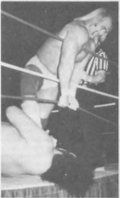
Hulk Hogan and Andre the Giant during the Superdome Showdown professional wrestling event on August 2, 1980, in New Orleans Credit: Unknown author Unknown author. Source and image details. Public domain (as listed on Commons). Commons rendition; no crop or other edits.

The Golden Era: Building a World Around Hulkamania
Working dates: 1982/1984–1993. Era boundaries overlap; they are useful guides rather than switches someone flipped backstage.
The WWF's national expansion turned regional wrestling personalities into household names. Television, celebrity appearances, merchandising, and WrestleMania helped make the ring the center of a much larger entertainment machine.
Hogan gave that machine its most recognizable hero. His comeback was easy to follow and difficult for a willing crowd to resist. Randy Savage offered a different attraction: frantic movement, theatrical aggression, and tightly organized matches. André the Giant could make an ordinary lockup feel like an impossible physical problem.
Those differences are the starting point of our moveset archive. A body slam from Hogan and a body slam from André might share a name, but they did different jobs in the story.
The New Generation: The Wrestler Moves Into Focus
Working dates: 1993–1997.
As the roster changed, Bret Hart and Shawn Michaels helped put technical precision, endurance, and elaborate counters closer to the center of the main event. The Undertaker, Yokozuna, Diesel, Razor Ramon, and Owen Hart provided very different opponents and personalities around them.
This was still a world of exaggerated characters. Yet a growing part of its appeal came from watching how a match worked: a damaged limb, a reversal that arrived one exchange earlier than expected, or a finisher established over a long struggle.
For the archive, that makes this an especially rich period to examine the relationship between character and technique.
The Attitude Era: Wrestling Becomes a Fight With the Whole World
Working dates: 1997–2002.
Steve Austin's conflict with Vince McMahon made rebellion a central attraction. The Rock could turn an interview into a main event. Mick Foley, D-Generation X, The Undertaker, Kane, and an increasingly varied roster helped create television built around confrontation and surprise.
The Monday Night Wars intensified that competition. Tag teams such as the Hardy Boyz, Edge & Christian, and the Dudley Boyz pushed spectacle in another direction through ladders, tables, and increasingly ambitious sequences.
The era also warrants scrutiny. Its popularity does not erase the treatment of women, offensive material, or physical costs of some of its most celebrated moments. A historical archive should be able to explain the excitement and examine the uncomfortable parts.
Ruthless Aggression: New Stars, More Wrestling Languages
Working dates: 2002–2008.
The WWF became WWE, and the Raw/SmackDown roster split created new opportunities. John Cena, Brock Lesnar, Randy Orton, and Batista emerged alongside established names including Kurt Angle, Triple H, Shawn Michaels, and The Undertaker.
Eddie Guerrero and Rey Mysterio helped demonstrate how many styles could coexist within the same promotion. A heavyweight power match, a submission-based contest, and a fast counter-wrestling exchange could all belong to the same wider show.
That range matters more to this project than a simple list of champions. The interesting question is how those styles influenced each other.
The PG and Reality Years: A Changing Audience
Working dates: 2008–2016.
WWE's family-oriented television presentation changed the tone without removing its capacity for compelling matches. Cena remained central, while CM Punk, Daniel Bryan, The Shield, and other performers helped shape the next stage.
Audience knowledge increasingly became part of the story. Fans followed independent wrestling, debated backstage decisions, and brought those opinions into arenas. Bryan's rise showed how strongly the audience could invest in a performer whose appeal did not depend on the old superhero mold.
NXT and the changing women's division also widened the range of performers and wrestling styles receiving sustained attention.
The New and Modern Eras: A Broader Stage
Working dates: 2016 onward, with another significant transition beginning in 2022.
The renewed brand split, the rise of the women's division, international events, and changing distribution platforms reshaped the presentation again. Roman Reigns' Tribal Chief character and Cody Rhodes' championship pursuit illustrate the continuing appeal of long-form rivalry.
Corporate and creative changes belong in the history, but the latest chapter is still being written. Our profiles will use specific dates rather than treat a contemporary marketing label as a settled historical verdict.
What This Archive Will Preserve
A career is too complicated for one permanent moveset. A wrestler might adopt a hold, abandon a risky attack, change a finish, or adjust to an opponent, promotion, injury, or new character.
Each profile therefore covers a defined period. We distinguish a regular move from a signature, a finisher from a near-fall, and a successful attack from an attempt that was countered. Match examples make those distinctions useful.
Start with Part 1: The Golden Era, then follow the individual profiles. The story is bigger than who won the belt. It is also the story of how these performers persuaded an audience to care about the next three seconds.
Sources and Further Reading
The original overview's historical links and archive proposal are preserved in the source response. Photographs and credits accompany this chapter.
Photographs & credits
Hulk Hogan and Andre the Giant during the Superdome Showdown professional wrestling event on August 2, 1980, in New Orleans Credit: Unknown author Unknown author. Source and image details. Public domain (as listed on Commons). Commons rendition; no crop or other edits.