Squared Circle Archives: Part 1 — The Golden Era
· Aaron Lehnen
The WWF Golden Era (1982/1984–1993): How Bigger Personalities Made the Wrestling Matter
Hulk Hogan lifts André the Giant. Randy Savage launches a flying elbow. Ricky Steamboat rolls a shoulder off the mat before the referee's hand lands.
Those moments belong to the same era, but they work for different reasons. One turns a wrestler into a superhero. Another makes an attack feel inevitable. The third convinces you that an exhausted man has one escape left.
The WWF's Golden Era is often remembered as a parade of extraordinary characters. Its lasting appeal also came from the contrast between them—and from matches built to make those differences count.
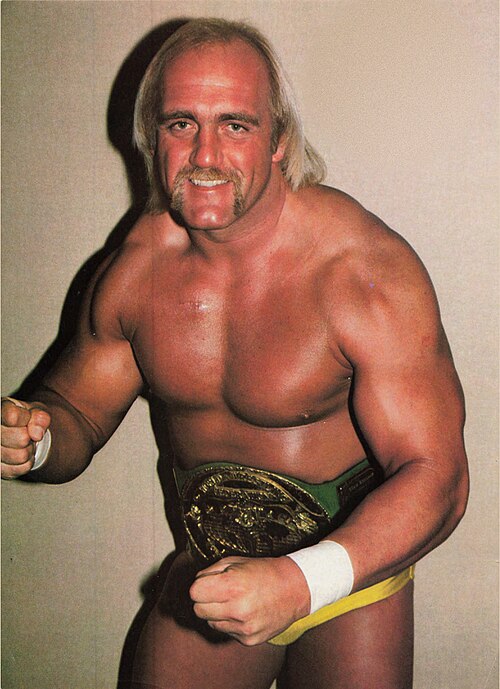
American professional wrestler Hulk Hogan, circa early 1985 Credit: Bill Apter. Source and image details. Public domain (as listed on Commons). Commons rendition; no crop or other edits.

A Regional Business Goes National
Before Hulkamania became the center of WWF television, wrestling was organized around regional promotions with their own stars, audiences, and traditions. The national expansion of the 1980s disrupted that landscape.
Vince McMahon's WWF combined wider television exposure with established talent, celebrity appearances, merchandising, and major events. WrestleMania gave those efforts a focal point: a show that could promise more than a night of matches.
The boundaries are untidy. Some histories begin the Golden Era with the 1982 ownership transition, others with Hogan's 1984 championship victory. For this series, both dates help explain the shift from expansion plans to their most visible expression.
The familiar cast did not arrive as interchangeable action figures. Many brought years of experience from other promotions. Their different backgrounds helped the WWF offer more than one kind of attraction.
Hulkamania Needed People to Push Against
Hogan's championship win over The Iron Sheik in January 1984 gave the expansion its central hero. His matches offered a clear emotional route: establish his strength, place him in danger, and build toward the comeback the audience wanted to see.
That formula depended on an effective opponent. A calculating technician could trap him. A rule-breaking villain could interrupt the recovery. A giant could make his strength seem inadequate.
André supplied perhaps the clearest example at WrestleMania III. The body slam mattered because the match and rivalry made it feel like an almost impossible task. The move's name was ordinary; the circumstances made it enormous.
The Golden Era repeatedly found ways to turn a familiar technique into a character-defining moment.
MTV, Managers, and a Much Larger Stage
The Rock 'n' Wrestling connection brought Cyndi Lauper and the WWF into each other's worlds. Wendi Richter's championship story and Roddy Piper's antagonism helped turn the crossover into conflict rather than a disconnected celebrity appearance.
Managers gave those conflicts another voice. Bobby Heenan could make an opponent seem more dangerous and a defeat more satisfying. Miss Elizabeth's relationship with Savage became central to his character's changing emotional world.
Women contributed to the era beyond those supporting roles, although the opportunities and presentation were uneven. Richter and Sherri Martel belong in its history as performers, not merely as names attached to the men's stories. Later chapters can examine that history with the space it deserves.
WrestleMania III: Two Ways to Hold an Arena
The 1987 show provides an unusually useful introduction to the era's range. Hogan and André offered a confrontation built around scale, anticipation, and a small number of decisive images.
Savage and Steamboat's Intercontinental Championship match offered speed, positioning, reversals, and repeated pinning threats. The audience had to follow smaller changes in control, with the championship seemingly within reach of either man.
Calling one match “spectacle” and the other “wrestling” misses the point. Both used athletic performance to tell a story. Their different tools explain why the same card could satisfy different kinds of fan. WWE's official results record the outcomes; the matches themselves explain the appeal.
Four Styles, One Wrestling World
The individual profiles will look closely at moves, but this broad map is a useful starting point:
| Style | What the audience follows | Representative performers |
|---|---|---|
| Heroic power | Strength tested, punishment survived, comeback earned | Hulk Hogan, Ultimate Warrior |
| Athletic precision | Timing, counters, aerial threats, pinning exchanges | Randy Savage, Ricky Steamboat |
| Physical dominance | The difficulty of moving or escaping a much larger opponent | André the Giant |
| Calculated control | A targeted attack, an escape cut off, a dangerous finish approaching | Ted DiBiase, Greg Valentine, Jake Roberts |
These are tendencies, not fixed boxes. Hogan could grapple. Savage could work slowly. A villain could win through a cleanly executed technique. Those overlaps are part of what makes the archive worth building.
Tag Teams Changed the Rhythm
Tag wrestling added another decision to every exchange: could the isolated wrestler reach a partner?
The Hart Foundation, British Bulldogs, Demolition, and other teams offered combinations of strength, speed, positioning, and character. A hot tag could create the same release as a singles comeback, but the structure gave both partners a role in preparing it.
The Dream Team and Strike Force will appear in our individual profiles because a wrestler's tag-team work can reveal choices that a singles moveset misses. The legal wrestler, the partner on the apron, and the manager at ringside all shaped what an audience expected next.
The Era Did Not End in One Match
Hogan and Savage's partnership and breakup gave the late 1980s an emotional center. Hogan and Warrior's WrestleMania VI confrontation offered a different question: what happens when both wrestlers are supposed to be the crowd's hero?
By the early 1990s, Bret Hart, Shawn Michaels, and other rising performers were helping shift the emphasis again. Some veterans left, some changed roles, and some remained important opponents for the next generation.
The transition was gradual. That is why our profiles use career periods rather than pretend that every wrestler changed styles on the same date.
Where We Go From Here
The Golden Era's biggest personalities gave viewers an immediate reason to watch. Their different approaches inside the ring gave those viewers reasons to stay.
Next, Part 2 examines Hogan's WWF repertoire (Coming October 28, 2026): the big boot and leg drop, the crowd work around them, and the traditional wrestling that connected those famous moments.
For the longer historical timeline and original research material, see the companion reference. Photographs and credits are preserved with the chapter.
Moveset tables & research references
Additional Tables From the Supplied Draft
| Wrestling Style | Defining Characteristics | Representative Stars |
|---|---|---|
| Powerhouse | Slams, strikes, splashes, physical dominance | Hogan, Warrior, André |
| Technical Grappling | Holds, leverage, counters, suplexes | Steamboat, Hennig, Bret Hart |
| Brawling | Strikes, aggression, intimidation | Piper, Orndorff, Big Boss Man |
| Aerial / Hybrid | Diving attacks, crossbodies, high-risk sequences | Savage, Snuka, Steamboat |
| Psychological Wrestling | Methodical pacing, deceptive tactics, dramatic finishers | Jake Roberts, Ted DiBiase |
| Year | Historical Milestone |
|---|---|
| 1982 | Vince McMahon acquires control of the wrestling business and accelerates its national expansion. |
| 1984 | Hulk Hogan defeats The Iron Sheik for the WWF Championship; the Rock ’n’ Wrestling crossover gains major momentum. |
| 1985 | WrestleMania debuts at Madison Square Garden; Saturday Night's Main Event begins airing on NBC. |
| 1987 | WrestleMania III features Hogan vs. André and Savage vs. Steamboat. Survivor Series also debuts. |
| 1988 | Randy Savage wins his first WWF Championship; the inaugural SummerSlam takes place. |
| 1989 | The Mega Powers explode as Hogan defeats Savage at WrestleMania V. |
| 1990 | The Ultimate Warrior defeats Hogan at WrestleMania VI; The Undertaker debuts later that year. |
| 1992 | Ric Flair wins the Royal Rumble and WWF Championship; SummerSlam takes place at Wembley; Bret Hart wins his first world title. |
| 1993 | Monday Night Raw debuts; Hogan departs following King of the Ring; the New Generation takes center stage. |
Photographs & credits
American professional wrestler Hulk Hogan, circa early 1985 Credit: Bill Apter. Source and image details. Public domain (as listed on Commons). Commons rendition; no crop or other edits.
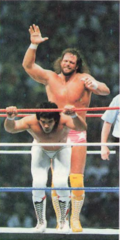
Randy Savage (above) and Ricky Steamboat during their match at WrestleMania III in 1987 Credit: David FitzGerald. Source and image details. Public domain (as listed on Commons). Commons rendition; no crop or other edits.

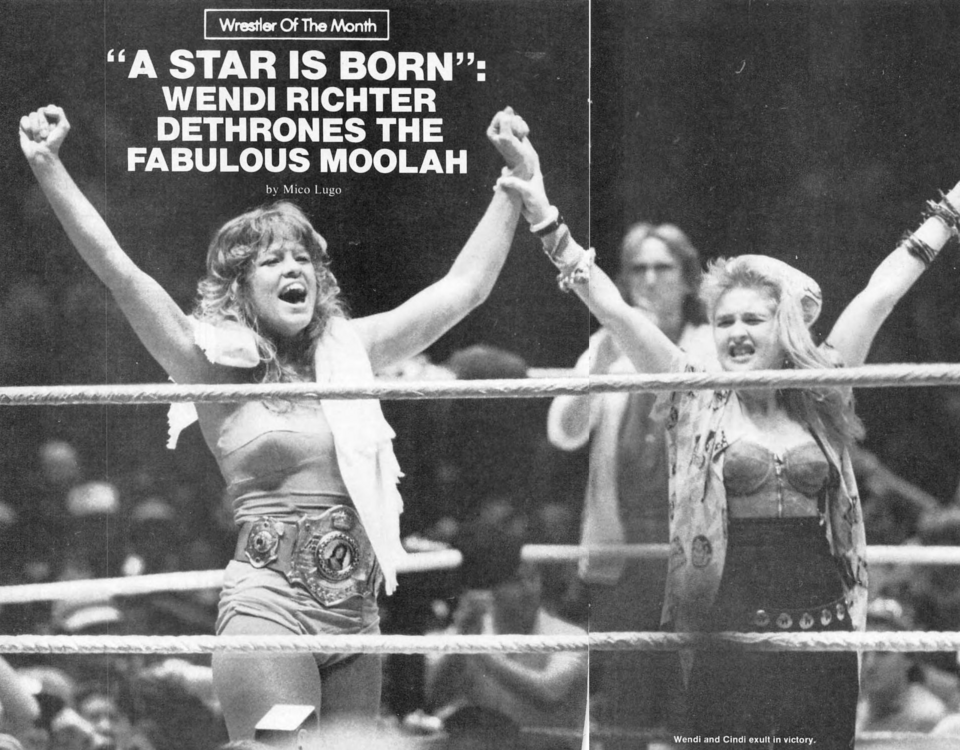
Wendi Richter (left) and Cyndi Lauper (right) celebrate, circa 1984 Credit: Unknown author Unknown author. Source and image details. Public domain (as listed on Commons). Commons rendition; no crop or other edits.

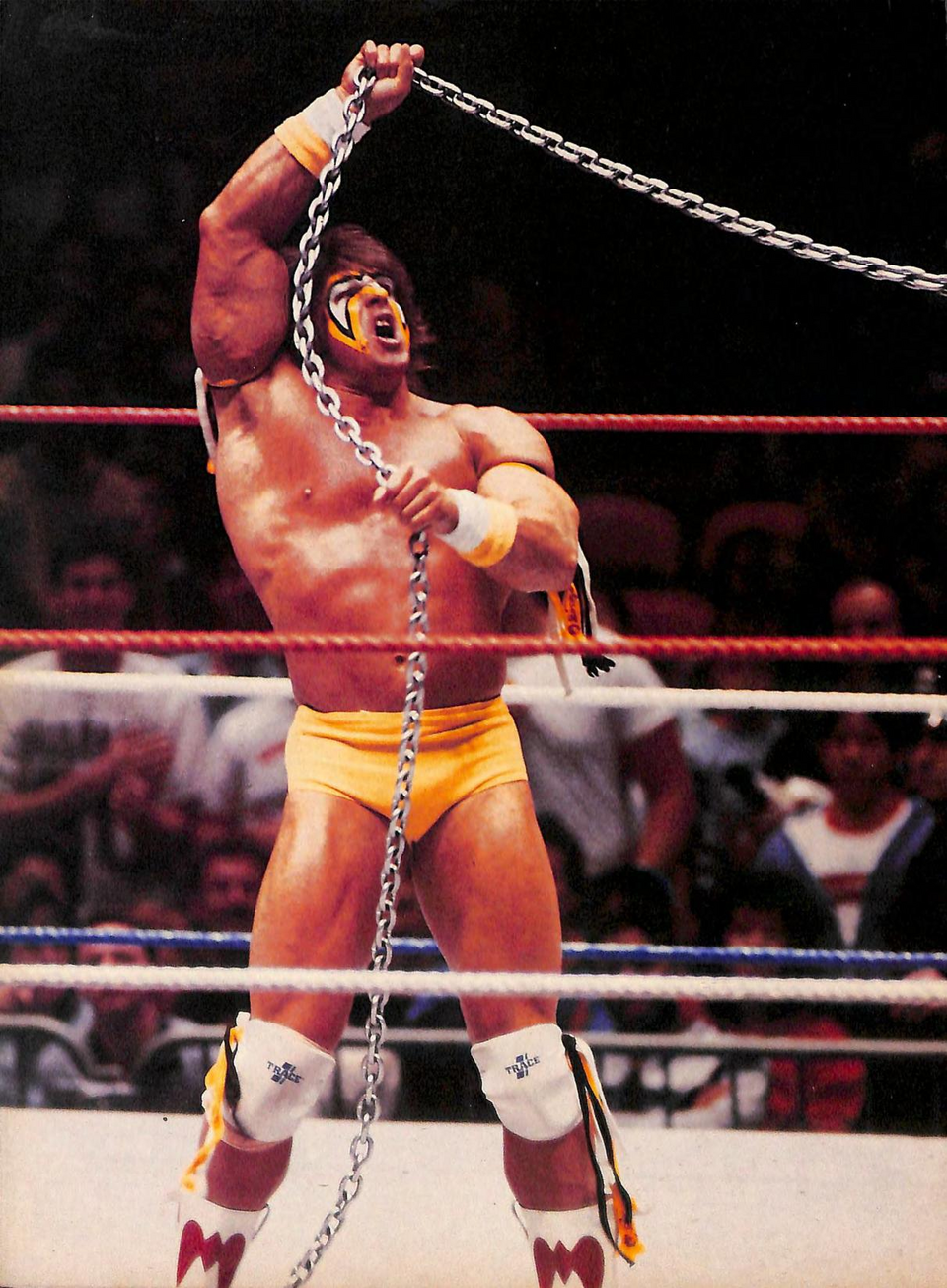
The Ultimate Warrior, circa 1988 Credit: Unknown author Unknown author. Source and image details. Public domain (as listed on Commons). Commons rendition; no crop or other edits.
