Squared Circle Archives: Part 2 — Hulk Hogan
- Squared Circle Archives
- Wrestling history
- WWF/WWE
· Aaron Lehnen
Hulk Hogan's WWF Moveset (1984–1993): Why Everyone Knew What Came Next—and Still Wanted to See It
The opponent throws another punch. Hogan stops retreating. A finger rises, a head shakes, and the crowd starts anticipating a boot that has not been delivered yet.
The finishing sequence is familiar. Its effectiveness depends on everything that happens before it: how long Hogan has struggled, how convincingly his opponent has controlled him, and whether the crowd believes the balance has finally changed.
That is the useful starting point for his Golden Era moveset. The big boot and leg drop are the landmarks. The rest of the match builds the road between them.
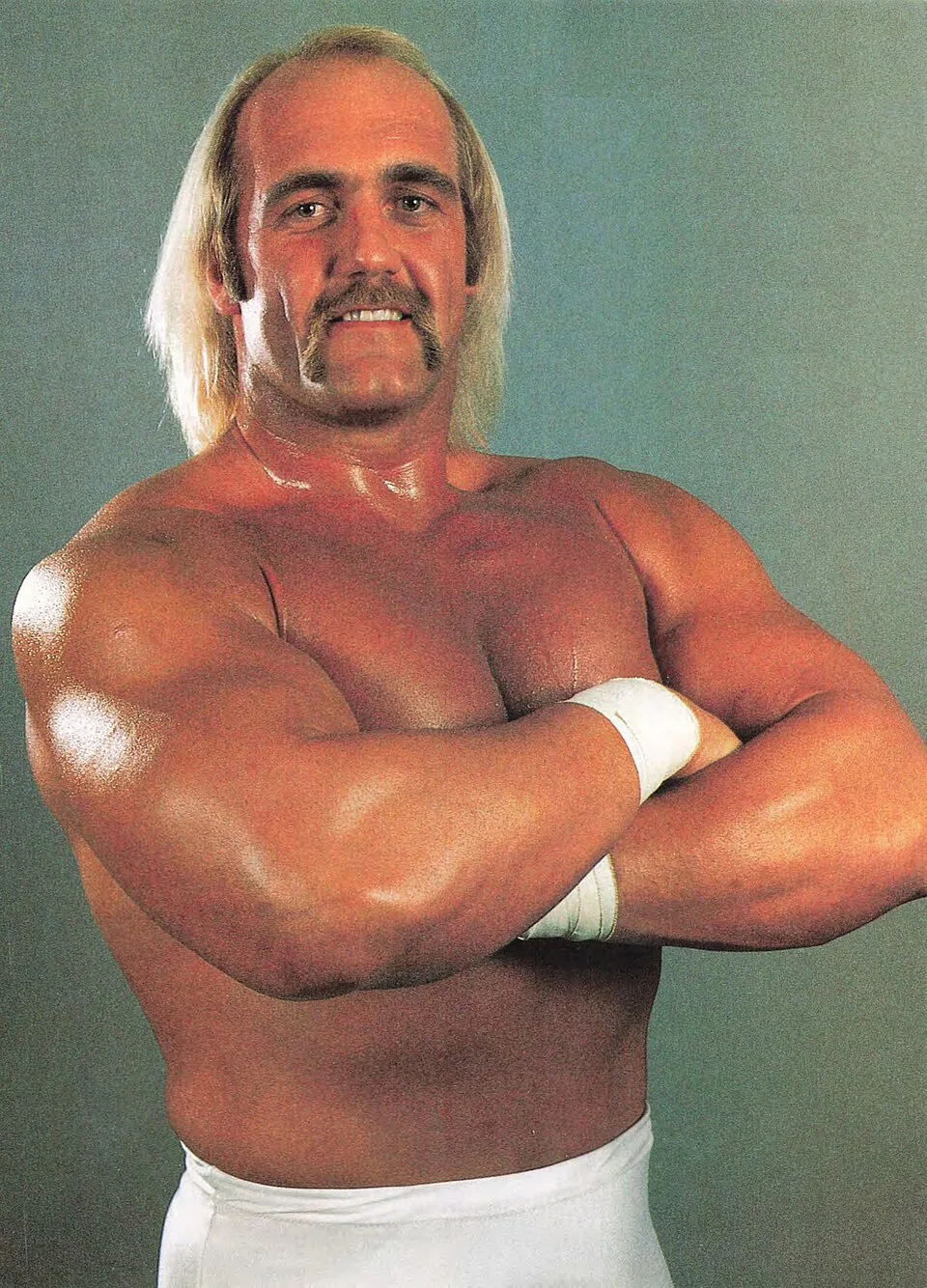
American professional wrestler Hulk Hogan, circa 1985 Credit: Unknown photographer. Source and image details. Public domain (as listed on Commons). Commons rendition; no crop or other edits.

A Wrestling Style Made for a Large Audience
Hogan had wrestled in different environments before becoming the centerpiece of the WWF's national expansion. His Japanese work, including the Axe Bomber lariat, should not be folded carelessly into a single timeless WWF moveset.
This chapter focuses on his 1984–1993 WWF presentation. Here, size, strength, audience participation, and a plainly readable comeback formed the center of his appeal.
Readability mattered. A body slam could establish that he was stronger than an opponent. A headlock could keep that opponent from using speed. A long spell underneath made the eventual recovery feel like a change in the whole match rather than another exchange of moves.
Hogan's best-known formula was therefore a partnership. The opponent needed room to appear dangerous, and Hogan needed to make that danger believable before overcoming it.
The Big Boot and Atomic Leg Drop
The boot interrupted an opponent's forward movement and created the opening for the leg drop. As a sequence, the two attacks gave the audience a clear sense of progress: the rally had become a finishing opportunity.
The leg drop was visually simple enough to recognize from a distant seat. It also gave the match a definite final image. After all the argument over whether Hogan could survive, the pin seemed to settle the matter.
Its familiarity did not make the buildup unimportant. Quite the opposite: a counter, a delayed cover, or an opponent escaping the usual sequence could suddenly become significant because the audience knew what was supposed to happen.
A signature becomes more useful to a match when viewers understand its normal place. Hogan's finish made that place unusually clear.
The Wrestling Between the Famous Moves
The supplied match inventory includes slams, suplexes, holds, striking attacks, and pinning exchanges alongside the celebrated finishing combination. Those techniques deserve attention without turning every appearance into evidence of a hidden technical identity.
Hogan generally presented them as parts of a power wrestler's match. A body slam could bring an opponent back under control. A clothesline could interrupt momentum. A hold could force a smaller or quicker wrestler to solve a different problem.
The useful question is what the move accomplished in that contest. An unusual suplex is an interesting archival find, but it does not automatically tell us more about the match than the timing of an ordinary punch.
The full working inventory keeps those less frequent techniques available without asking this feature to become a catalog.
Three Matches That Explain the Appeal
André the Giant: WrestleMania III, 1987
Against André, the body slam carried the emotional weight normally associated with a finisher. The rivalry and difference in scale made lifting him seem like the central challenge.
Hogan's strength could not be taken for granted. That made the successful slam a turning point: an ordinary item in a heavyweight wrestler's repertoire had become the match's defining achievement. Hogan retained the championship, but the image of the lift became the enduring shorthand for the confrontation. Official results.
Randy Savage: WrestleMania V, 1989
Savage presented a different problem. The match followed the collapse of the Mega Powers partnership, with Elizabeth central to its emotional history.
Where André made Hogan's strength uncertain, Savage's movement and hostility made the contest feel personal and unstable. A familiar Hogan comeback could now answer a betrayal rather than simply a physical mismatch.
That contrast explains why repeating a broad structure did not necessarily produce the same match. The opponent changed what the structure meant. Official results.
The Ultimate Warrior: WrestleMania VI, 1990
Two popular power wrestlers complicated the usual arrangement. Hogan was not facing an obvious villain whom the audience could comfortably unite against.
The attraction came partly from comparing their strength, endurance, and familiar signatures. Warrior's victory showed how a match could use recognition of Hogan's normal ending to make a different ending matter.
Watch it for the crowd's changing loyalties as much as the power moves. The audience was being asked to choose between two versions of invincibility.
The Hulk-Up Was a Change in the Story
The Hulk-Up was not one technique. It was a sequence of reactions: Hogan absorbed punishment differently, changed his posture, connected with the crowd, and began taking back control.
Its success depended on contrast. If he had looked equally unstoppable throughout, there would have been little emotional distance to travel. The struggle made the recovery legible.
That does not mean every Hogan match reached the same standard. Repetition could become mechanical, and an opponent needed enough credibility to make the danger convincing. But the underlying idea remains useful: anticipation can make a simple action carry an enormous response.
What to Watch For
On a rewatch, notice when Hogan invites the audience into the match. Look at how he responds to a hold, when he pauses after a successful attack, and how long the opponent is allowed to keep control.
Those decisions explain his style more clearly than counting the moves in the comeback. The fans knew the landmarks. Hogan's job was to make the journey feel worth taking again.
Next: Randy Savage and the discipline underneath the madness (Coming November 4, 2026). The moveset reference and photo credits accompany this profile.
Moveset tables & research references
Hulk Hogan's Golden Era Moveset: Historical Reference Table
The following table consolidates documented examples from selected WWF matches between 1984 and 1993.
The dates represent verified examples within the reviewed match accounts, not necessarily the first or last time Hogan used each maneuver.
| Wrestling Technique | Classification | Documented Example |
|---|---|---|
| Atomic / Running Leg Drop | Primary finisher | Iron Sheik, 1984 |
| Running Big Boot | Signature strike / setup | Iron Sheik, 1984 |
| Scoop Bodyslam | Power maneuver | André the Giant, 1987 |
| Clothesline | Regular power strike | Iron Sheik, 1984 |
| Atomic Drop | Grappling / power move | Greg Valentine, 1984 |
| Vertical Suplex | Throw | Greg Valentine, 1984 |
| Shoulderbreaker | Power maneuver | Greg Valentine, 1984 |
| Knee Drop | Grounded attack | Iron Sheik, 1984 |
| Elbow Drop | Grounded attack | Iron Sheik, 1984 |
| Powerslam | Power maneuver | King Kong Bundy, 1986 |
| Side Headlock | Grappling control | Randy Savage, 1989 |
| Drop Toe Hold | Technical takedown | Randy Savage, 1989 |
| Front Facelock | Grappling control | Randy Savage, 1989 |
| Backbreaker | Power maneuver | Ultimate Warrior, 1990 |
| Back Suplex | Throw | Ultimate Warrior, 1990 |
| Small Package | Pinning combination | Ultimate Warrior, 1990 |
| Chinlock | Grappling control | Greg Valentine, 1984 / Ultimate Warrior, 1990 |
| Punching Combinations | Striking offense | Multiple Golden Era matches |
This is a documented working repertoire, not a claim that every move Hogan ever performed has already been identified.
For the long-term archive, additional house shows, televised matches, international appearances, and rare footage can help establish further moves and the frequency of their use.
Archival sources and match references
The moveset has been developed from individual contemporary-match retrospectives rather than generic career-wide move lists. The key references are:
Hogan vs. Iron Sheik — January 1984 and Hogan vs. Greg Valentine — July 1984.
Wrestling Recaps
+1
Hogan vs. André — WrestleMania III and Hogan vs. Savage — WrestleMania V.
WWE
+1
Hogan vs. Ultimate Warrior — WrestleMania VI and Hogan vs. Yokozuna — 1993.
Wrestling News and Results
+1
WWE also has a full Hogan vs. Earthquake SummerSlam 1990 match available on its WWE Vault YouTube channel, providing a useful primary-footage reference for future frame-by-frame verification.
YouTube
Publication title: Squared Circle Archives: Part 2 Suggested URL: /squared-circle-archives-part-2-hulk-hogan-moveset/ Next article: Randy Savage — Golden Era Moveset (1985–1993)
This establishes the template for subsequent wrestler profiles, including how we document regular techniques, finishing moves, unusual match-specific maneuvers, and differences between promotions. The next stage of the archival process will be timestamping moves in full-match footage and expanding the table without confusing an attempted move with a successfully executed one.
Photographs & credits
American professional wrestler Hulk Hogan, circa 1985 Credit: Unknown photographer. Source and image details. Public domain (as listed on Commons). Commons rendition; no crop or other edits.
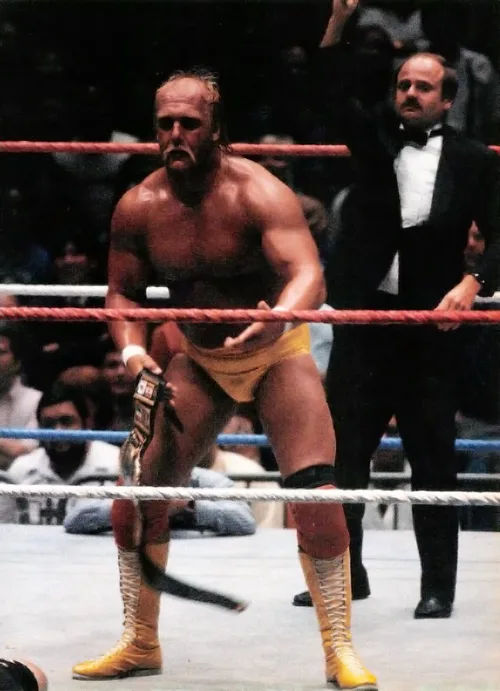
Hulk Hogan with the WWF World Heavyweight Championship, circa 1988 Credit: Unknown author Unknown author. Source and image details. Public domain (as listed on Commons). Commons rendition; no crop or other edits.

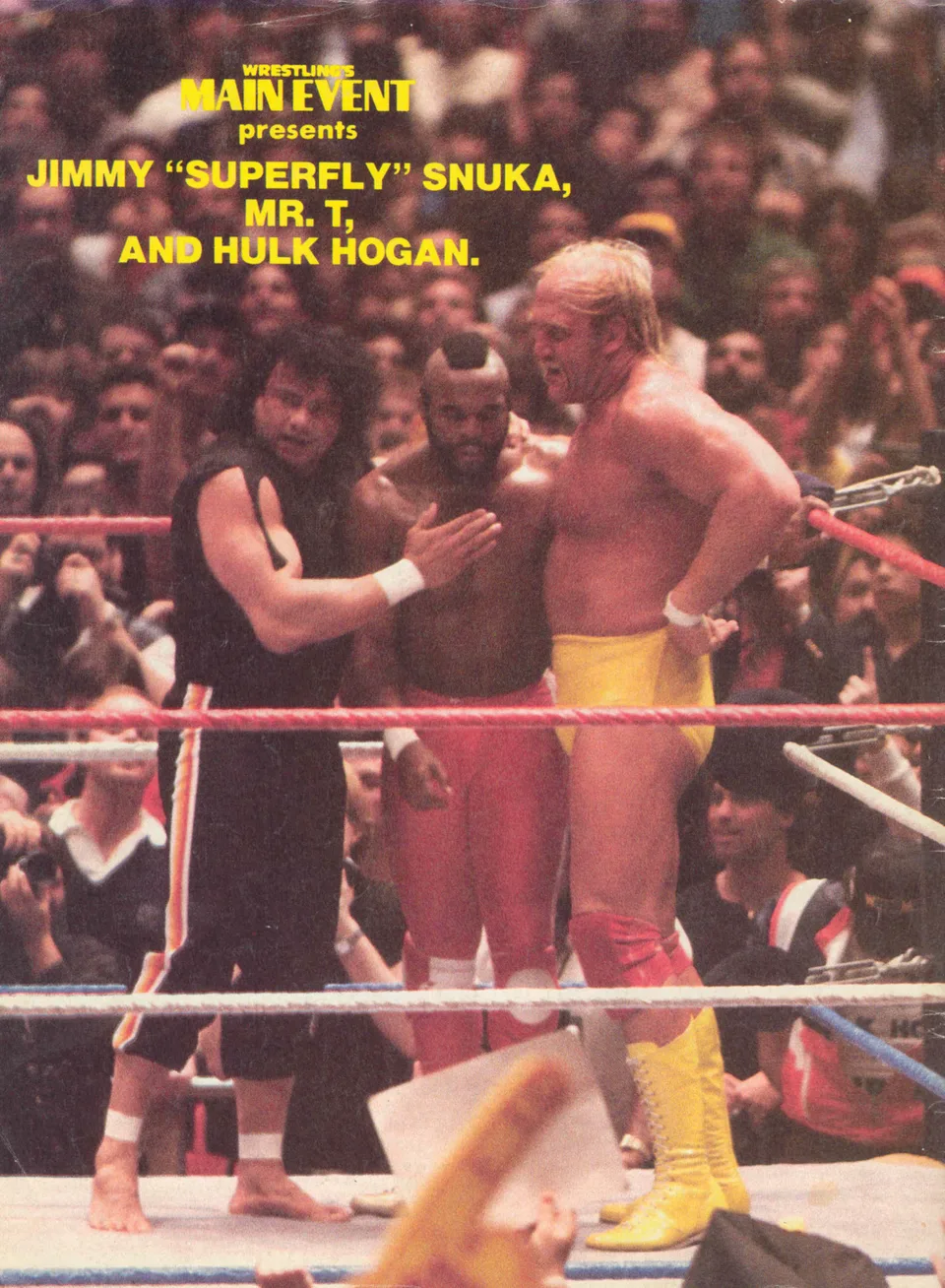
Jimmy Snuka (left), Mr. T (center) and Hulk Hogan (right) at Wrestlemania I, 1985 Credit: Unknown author Unknown author. Source and image details. Public domain (as listed on Commons). Commons rendition; no crop or other edits.
