Squared Circle Archives: Part 3 — Randy Savage
- Squared Circle Archives
- Wrestling history
- WWF/WWE
· Aaron Lehnen
Randy “Macho Man” Savage (1985–1993): The Discipline Underneath the Madness
Savage could make a match look seconds away from falling apart. He darted between attacks, argued, climbed, struck, and reacted as if every interruption were a personal insult. Then the flying elbow arrived with the precision of a closing bracket.
That tension is what makes him fascinating: the character seemed difficult to contain, while the strongest matches gave his restless energy a clear shape. His offense could be spectacular, but its placement often mattered as much as its height.
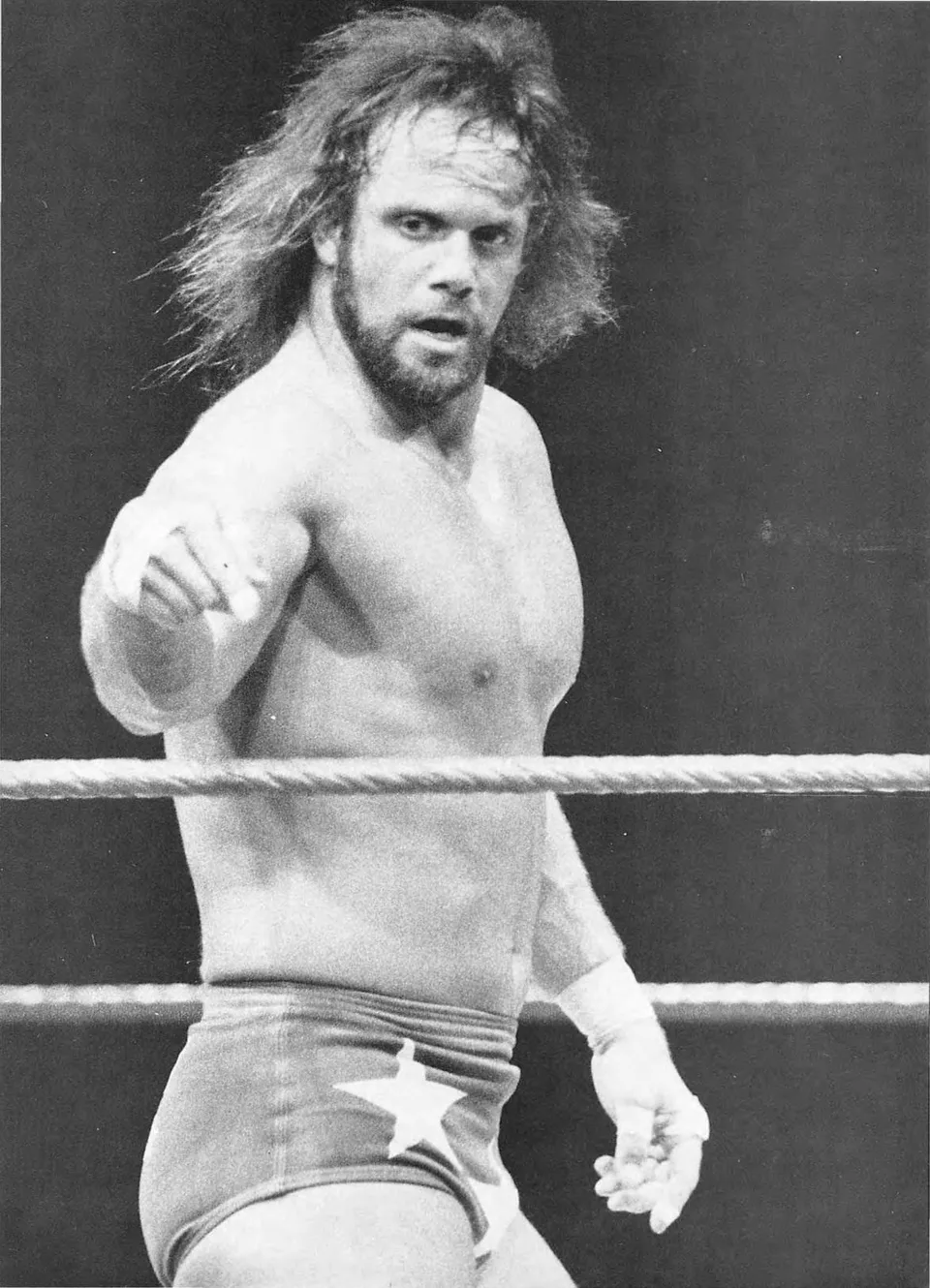
Randy Savage, circa 1987 Credit: Unknown author Unknown author. Source and image details. Public domain (as listed on Commons). Commons rendition; no crop or other edits.

More Than the Man on the Top Rope
Savage brought established experience into the WWF in 1985. His combination of athleticism, traditional wrestling, and aggressive character work made him a useful contrast to the promotion's larger power wrestlers.
He could threaten from above, but he also used suplexes, control holds, strikes, pinning counters, and opportunistic attacks around the ropes. The variety allowed him to change a match's rhythm without abandoning his identity.
Miss Elizabeth added another dimension. Her relative composure sharpened the contrast with Savage's intensity, while his treatment of her helped determine how audiences understood him. Their relationship was part of the match's emotional setting, not simply an entrance detail.
The same wrestler could be an insecure villain, an intense champion, or a veteran searching for another chance. His techniques did not need to be completely replaced for those versions to feel different.
The Flying Elbow Needed a Moment Worth Climbing For
The flying elbow is Savage's most recognizable finish. Its appeal begins before the landing: the decision to climb tells the audience that he believes the opponent can no longer stop him.
That creates a small interval of suspense. Will the opponent recover? Is Savage taking too long? Has the preceding attack created enough of an opening?
The maneuver becomes more than an aerial display because the match has prepared the audience to read it as a possible ending. The height adds spectacle; the timing supplies consequence.
A missed or survived elbow can therefore carry meaning without being a completely different technique. Once a crowd recognizes the finish, the match can play with its expectations.
The Arsenal Beneath the Elbow
The diving double axe handle offered another aerial threat, often with a different role: an attack that could extend control or change momentum without automatically promising the final pin.
On the mat and at close range, Savage's suplexes and holds connected the larger moments. Running knees, clotheslines, and grounded strikes let him switch quickly from movement to pressure. Rope-assisted attacks helped the villainous versions of his character turn the environment into an advantage.
Those choices made his offense adaptable. Against an opponent who could match his speed, he could interrupt the flow. Against a stronger wrestler, a sudden attack could keep a straightforward power contest from developing.
The companion inventory preserves the wider repertoire. In the main story, the important distinction is between variety for its own sake and variety that changes the opponent's problem.
Four Matches, Four Different Savages
Ricky Steamboat: WrestleMania III, 1987
The Intercontinental Championship match is the clearest introduction to Savage's timing. Its excitement comes from changes in position and repeated pinning threats as well as the more obvious attacks.
Steamboat's ability to escape and answer gave Savage's aggression something precise to work against. Each man made the other's next opening important. Steamboat won the championship, but both performances remain worth watching as an explanation of how smaller exchanges can fill a large stage. Official results.
Ted DiBiase: WrestleMania IV, 1988
The tournament final places Savage in a different kind of story. Championship ambition, accumulated effort, managers, and outside involvement all contribute to the contest.
His aerial finish could now complete a larger night-long journey. The move was familiar; the circumstances made its arrival feel like a destination rather than another item in the repertoire.
Hulk Hogan: WrestleMania V, 1989
The breakup of the Mega Powers changed the emotional temperature. Savage's hostility toward a former partner gave his attacks a grievance behind them.
Notice how easily the intensity that had supported an energetic hero could become the behavior of a resentful antagonist. Character development did not require discarding his wrestling language. It changed how viewers interpreted it. Official results.
Ric Flair: WrestleMania VIII, 1992
By 1992, Savage could draw on years of audience investment. The Flair rivalry again placed Elizabeth near the center of the emotional stakes, but the veteran Savage was not simply replaying his earliest WWF identity.
The championship win demonstrates how a performer can remain recognizable while changing the story around familiar tools. Official results.
Why Savage's Matches Reward Rewatching
On a first viewing, the voice, costumes, and sudden movement dominate attention. On a rewatch, follow the transitions. Look for the attack that gives Savage time to climb, the reversal that stops his momentum, or the pause that lets an emotional reaction register.
His style could be abrasive and deliberately frustrating when the character called for it. That frustration was often part of the route to the audience's satisfaction.
The useful lesson is that athleticism becomes more compelling when a match organizes it. Savage could leap, grapple, and strike, but his most memorable performances made those abilities serve a particular conflict.
The Man Behind the Familiar Image
The flying elbow remains the easiest image to remember. The interesting wrestler is the one who made you want to see it, fear it, or hope someone would move out of the way.
That is the Savage this archive aims to preserve: a performer whose theatrical intensity and technical range could reinforce each other.
Next: André the Giant, and how a wrestling style changes over a long career (Coming November 11, 2026). Research reference · Photographs and credits.
Moveset tables & research references
Additional Tables From the Supplied Draft
| Wrestling Maneuver | Classification | Documented WWF Example |
|---|---|---|
| Flying Elbow Drop | Primary finishing move | WrestleMania IV, 1988 |
| Diving Double Axe Handle | Signature aerial strike | Tito Santana, 1986 |
| Running High Knee | Signature strike | Ricky Steamboat, 1987 |
| Clothesline | Regular striking offense | Ricky Steamboat, 1987 |
| Vertical Suplex | Traditional throw | Ricky Steamboat, 1987 |
| Gutwrench Suplex | Technical throw | Ricky Steamboat, 1987 |
| Back Suplex | Traditional throw / counter | Hulk Hogan, 1989 |
| Atomic Drop | Power / transitional attack | Ricky Steamboat, 1987 |
| Scoop Bodyslam | Traditional power maneuver | Ultimate Warrior, 1991 |
| Knee Drop | Grounded strike | Ricky Steamboat, 1987 |
| Elbow Smash | Regular strike | Ricky Steamboat, 1987 |
| Rope-Assisted Neck Snap | Targeted rope attack | Hulk Hogan, 1989 |
| Armbar | Grappling control | Hulk Hogan, 1989 |
| Chinlock | Grappling control | Hulk Hogan, 1989 |
| Swinging Neckbreaker | Grappling / impact move | Ric Flair, 1992 |
| Snapmare | Traditional takedown | Greg Valentine, 1988 |
| Roll-Up / Schoolboy | Pinning combination | Ric Flair, 1992 |
| Small Package / Cradle | Pinning combination | Greg Valentine, 1988 |
| Eye Rake | Villainous tactic | Ricky Steamboat, 1987 |
| Corner Strikes | Regular striking offense | Hulk Hogan, 1989 |
| Wrestling Characteristic | Hulk Hogan | Randy Savage |
|---|---|---|
| Primary Wrestling Identity | Powerhouse superhero | Athletic, aggressive hybrid |
| Primary Finisher | Atomic Leg Drop | Flying Elbow Drop |
| Famous Signature Attack | Running Big Boot | Diving Double Axe Handle |
| Technical Grappling | Traditional holds and counters | Wider mixture of holds, counters, and suplexes |
| Aerial Offense | Comparatively limited | Central to his offensive identity |
| Match Psychology | Heroic comeback and physical resilience | Precision, aggression, timing, and unpredictability |
| Typical Finishing Structure | Hulk-Up → Big Boot → Leg Drop | Opponent grounded → Top-Rope Flying Elbow |
| Golden Era Strength | Audience participation and spectacle | Athletic versatility and dramatic intensity |
Photographs & credits
Randy Savage, circa 1987 Credit: Unknown author Unknown author. Source and image details. Public domain (as listed on Commons). Commons rendition; no crop or other edits.
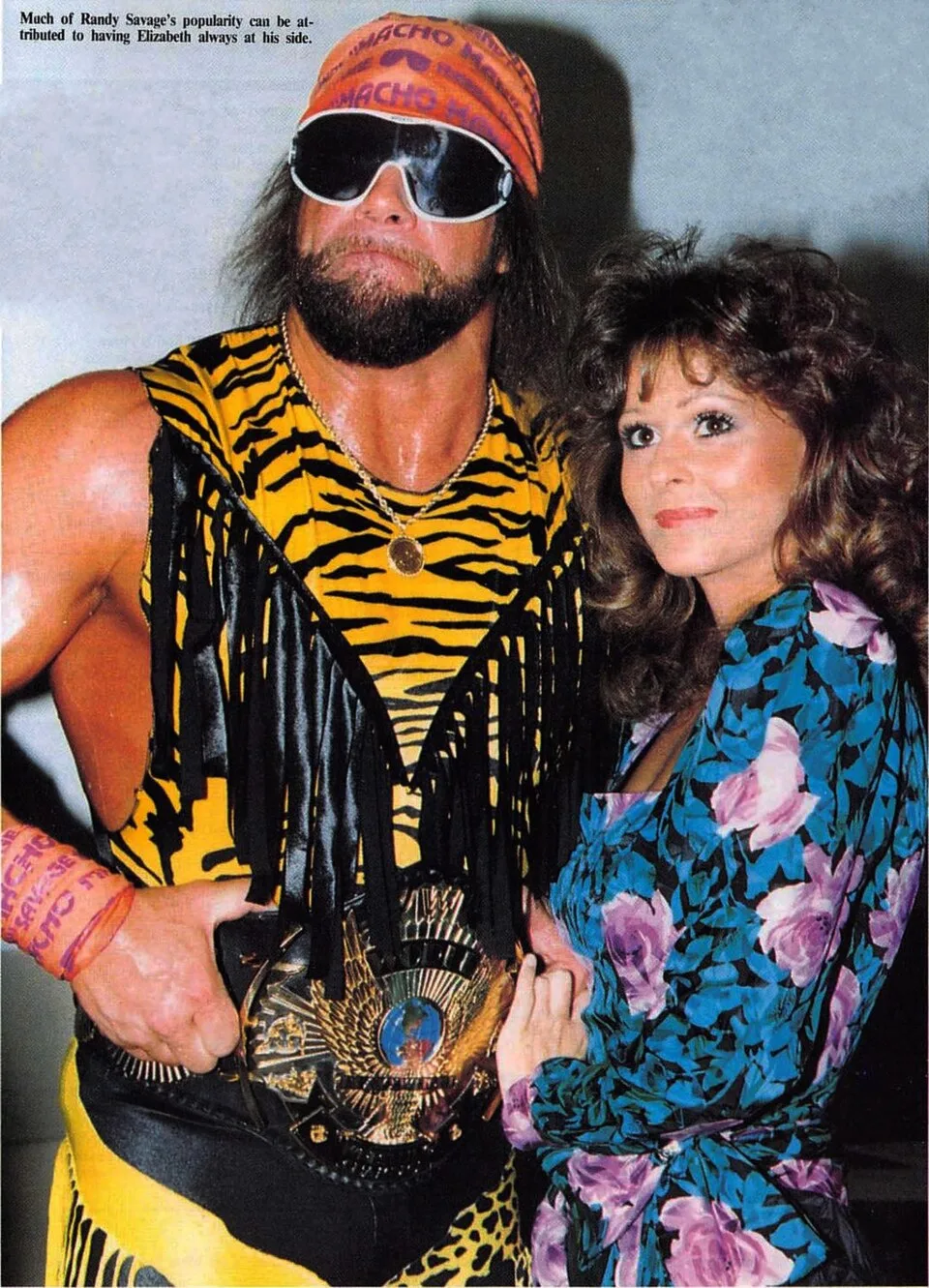
"Macho Man" Randy Savage during his first reign as World Wrestling Federation heavyweight champion, alongside his wife Miss Elizabeth circa 1988 Credit: David Fitzgerald. Source and image details. Public domain (as listed on Commons). Commons rendition; no crop or other edits.

Randy Savage (above) and Ricky Steamboat during their match at WrestleMania III in 1987 Credit: David FitzGerald. Source and image details. Public domain (as listed on Commons). Commons rendition; no crop or other edits.
