Horror at the Controls: Part 5 — The Texas Chain Saw Massacre
- Horror at the Controls
- Horror films
- Horror games
- Atari
- The Evil Dead
· Aaron Lehnen · 9 min read
Leatherface, the family, and a very different kind of multiplayer nightmare.
A chainsaw is a weapon, a warning, and a deadline. You hear it before you know exactly where it is. Once you do know, you may already be running out of places to go.
That makes The Texas Chain Saw Massacre an unusually direct proposition for a game. Its danger is physical and immediate. The people chasing you know the house, the exits, and one another. You do not.
Its adaptations nevertheless took radically different approaches. An Atari game put Leatherface under the player's control in 1983. Forty years later, a multiplayer game made the wider family just as important as the man holding the saw.
Between them lies a useful question: is this franchise frightening because of a recognizable killer, or because you have entered a world where everyone else understands the rules?
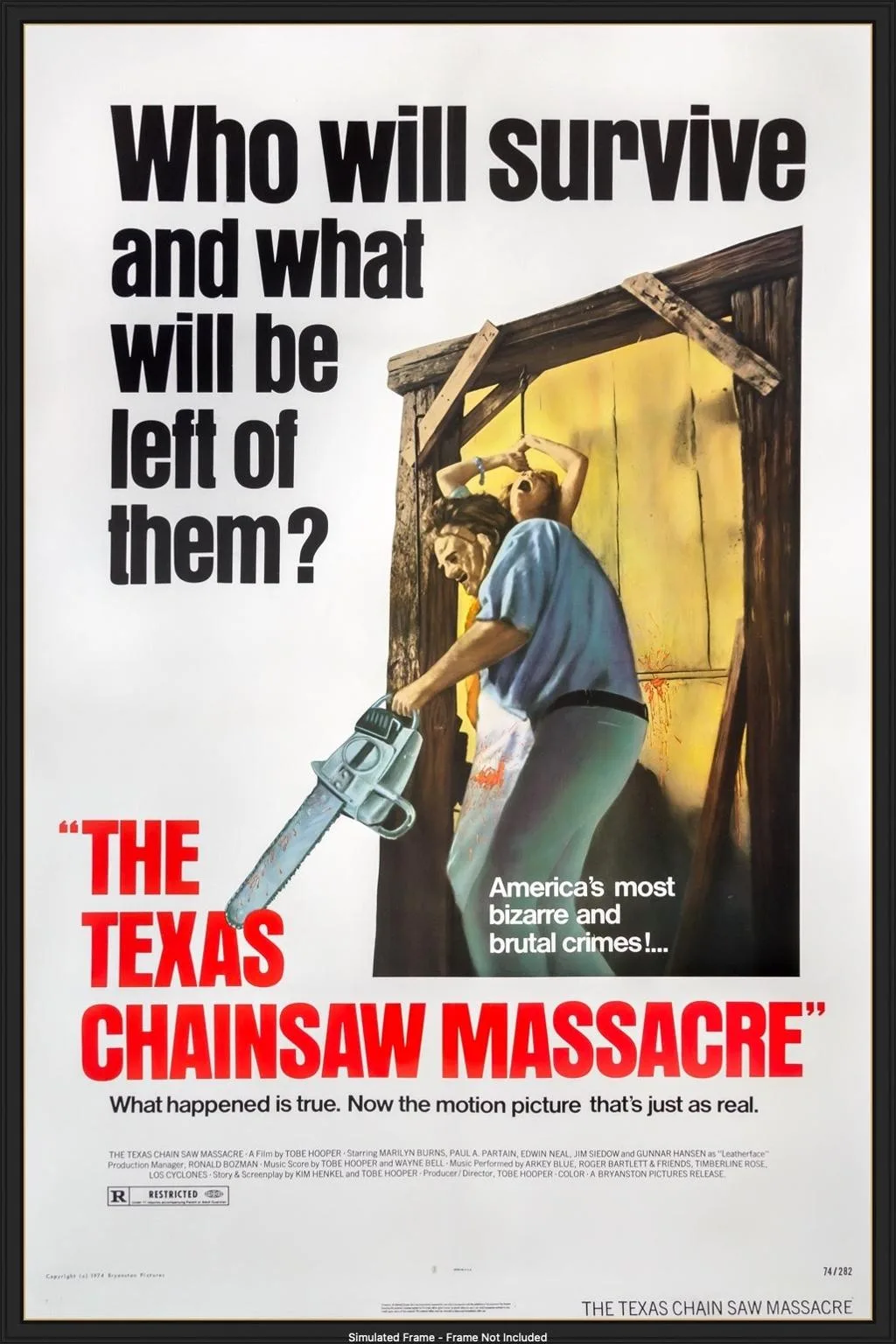
The house at the end of the road
Tobe Hooper's 1974 film follows a group of young travelers into a situation that becomes horrifyingly difficult to escape. Its familiar imagery can disguise how much of its power comes from exhaustion, noise, heat, and the collapse of ordinary expectations.
A house should be somewhere to ask for help. A family should be a reassuring human connection. Here both become part of the trap.
Leatherface is central, but he is not the entire threat. Other members of the household watch, restrain, deceive, and participate. Escaping the most visible pursuer does not mean the surrounding world has become safe.
The film's suggestion of a true story should also be distinguished from a literal historical account. Its nightmare is fiction. Influences and marketing claims do not turn its specific sequence of murders into a documented event.
For game designers, the important material is the situation: outsiders with limited knowledge, an environment arranged against them, and pursuers whose disturbing domestic routine has made violence ordinary.
That can support a chase. It can also support a whole network of interlocking threats.
1983: Leatherface's greatest enemy is fuel consumption
The Texas Chainsaw Massacre · Atari 2600 · Wizard Video Games
Where Wizard's Halloween asks the player to protect children, its Texas Chainsaw Massacre adaptation puts the chainsaw in the player's hands. You pursue fleeing victims while negotiating obstacles and watching a fuel gauge.
It is a stark reversal of perspective. The player is not trying to survive the movie. The player is trying to maintain the killer's momentum.
The original manual is unusually helpful for understanding the design beneath the controversy. The saw consumes a small amount of fuel while idling and much more when revved. Obstacles can delay Leatherface, allowing targets to escape, and some obstructions can be cut away at the cost of additional fuel.
That creates a simple resource problem. Attacking constantly is inefficient. You need to get into range, choose when to use the saw, and avoid spending your remaining time caught against something that will not move.
The manual awards points for victims and additional fuel at score milestones. Its loop is therefore a familiar arcade structure wearing a particularly uncomfortable identity: pursue, spend, replenish, and keep going.
The ending punctures the fantasy. When the fuel is exhausted, a survivor returns to kick Leatherface. The supposedly unstoppable killer has become a stranded machine operator with an embarrassingly empty tank.
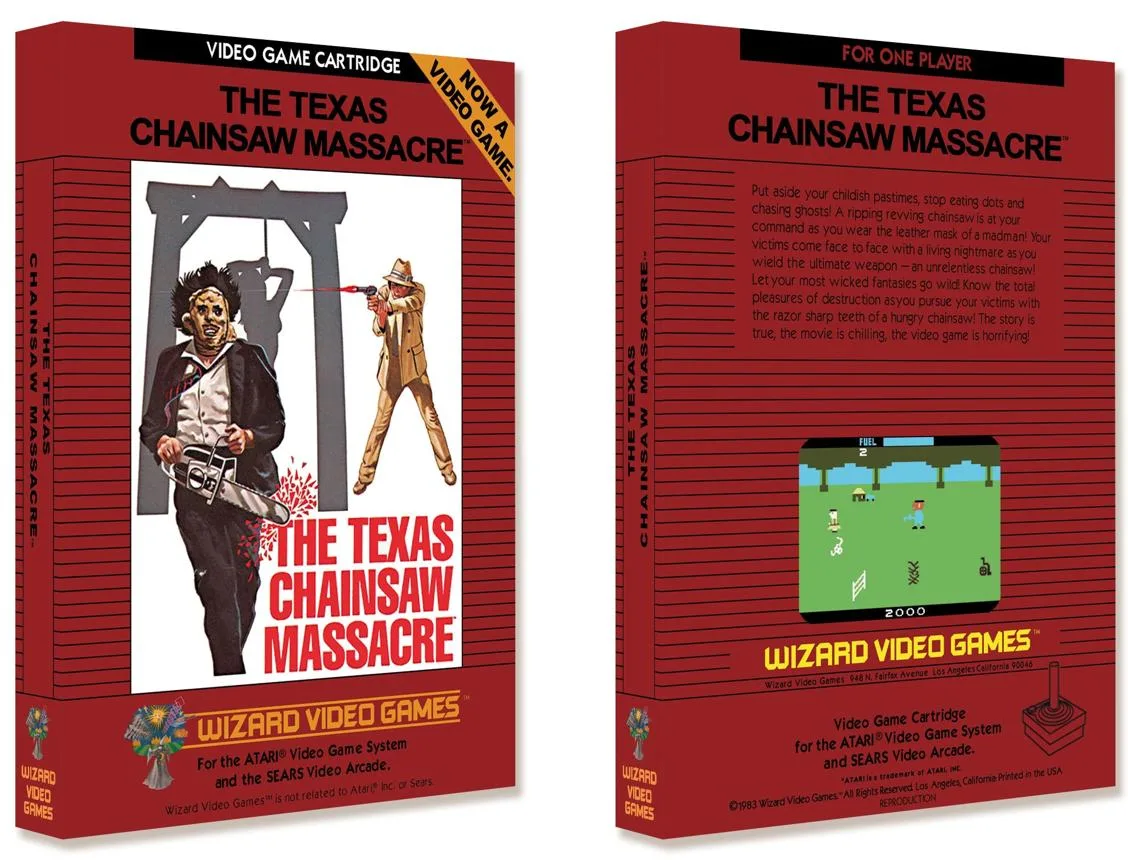
Why the premise caused more discussion than the rules
The cartridge's reputation comes partly from asking players to perform the killer's role rather than resist him. On a system associated with family living rooms, that was a provocative use of a notorious adult film license.
The actual game is much simpler than its reputation might imply. Limited graphics and repetitive action cannot reproduce the film's oppressive detail. What remains is the scoring loop and the knowledge of whom you are controlling.
That contrast makes it historically interesting without automatically making it a successful horror adaptation. It captures a recognizable weapon and an inversion of sympathy, but little of the film's wider social nightmare.
The original story makes the family frightening as a collective. The Atari design mostly makes Leatherface a character to steer around obstacles.
Both are understandable interpretations of the available hardware and market. They simply should not be confused with the same artistic objective.
2023: the family becomes a team
The Texas Chain Saw Massacre · Sumo Nottingham / Gun Interactive
The modern multiplayer game finds a stronger way to use the household. Its main structure places four victims against three family members, distributing responsibility across both sides of the chase.
That immediately changes the familiar asymmetrical formula. The danger is not concentrated in one person who must somehow be everywhere. The family can divide tasks, control routes, respond to noise, and make an escape attempt dangerous from more than one direction.
Victims begin at a disadvantage. They need to understand the environment, obtain useful items, and find an exit while remaining hard to track. Even when a route appears available, opening it can require time or produce a warning that someone else will notice.
The result is a game about overlapping attention. Leatherface can create immediate pressure while other family members influence which paths remain safe. A victim who escapes one pursuit may simply be entering someone else's area.
This is closer to the film's underlying situation than a sequence of isolated boss fights. The house does not belong to you. The people who know it are cooperating, and the useful route you discover may already have been accounted for.
Ordinary actions become risky decisions
Opening a passage, collecting equipment, or crossing a room is rarely frightening in an ordinary adventure. Here the same actions can reveal a position or consume the time needed for someone else to arrive.
That makes restraint a meaningful activity. The player is not always waiting because there is nothing to do. They may be waiting because acting immediately would give away the only advantage they have.
The design also makes group survival complicated. Cooperation helps, but players have different information and different opportunities. Someone may need a distraction; someone else may already be close enough to an exit that remaining would be a terrible risk.
The film's helplessness becomes a series of imperfect decisions rather than a purely scripted ordeal. You may understand why a character in this situation would make a mistake once you have tried to manage it yourself.
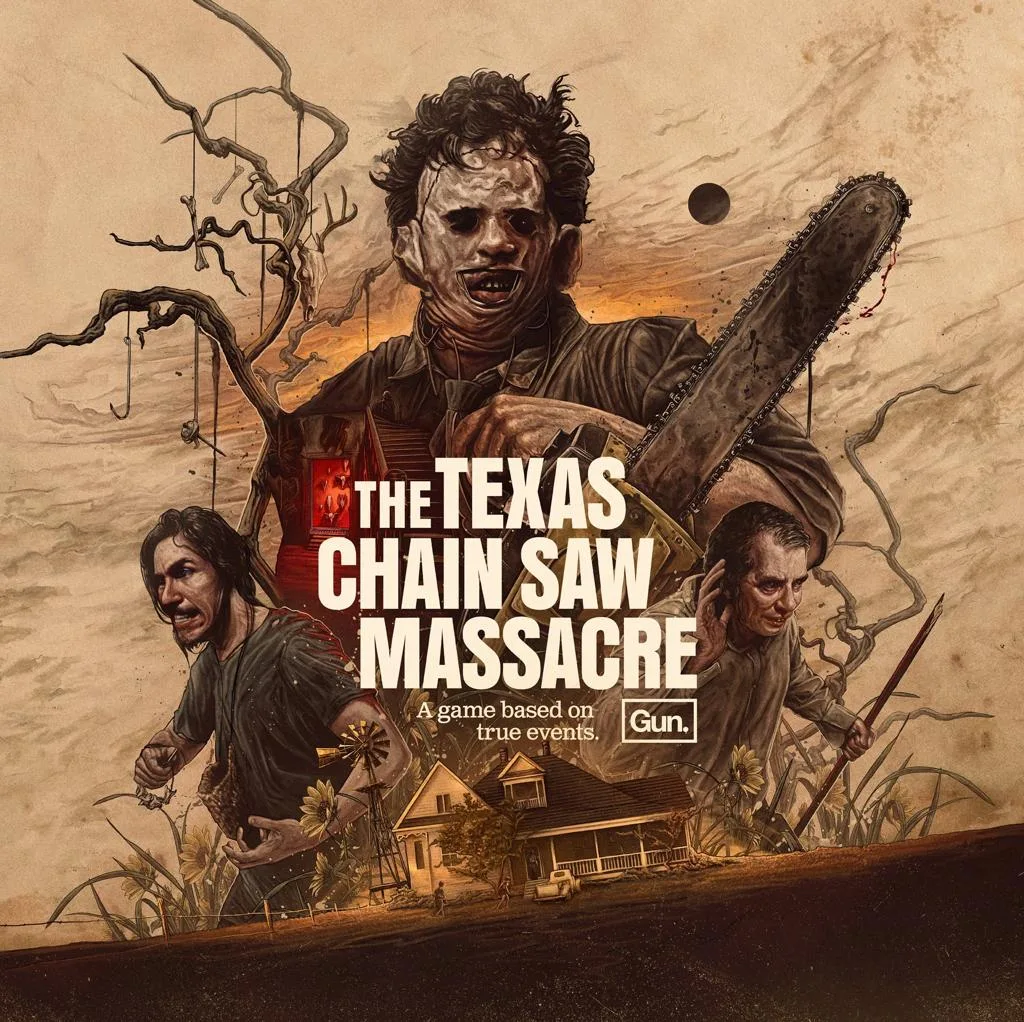
Grandpa turns sound into a stop signal
One of the game's most distinctive ideas is giving Grandpa a detection role. Family members can collect blood and feed him, increasing the pressure he places on moving victims.
That takes an unsettling figure from the film and gives him a clear function inside a multiplayer system. He is not merely a recognizable decoration in the house. The family has a reason to attend to him, and victims have another condition to watch.
The resulting tension can invert the usual instinct to run. Movement is often how players escape a pursuer; at the wrong moment, it can help reveal them.
A good adaptation mechanic often has exactly that quality. It makes sense in the game's own rules while recalling something distinctive about the source. You do not need to reproduce the dinner scene literally to make the family's grotesque domestic relationships affect play.
It also keeps the household important even when Leatherface is elsewhere. The threat belongs to an arrangement of people and systems, not just the loudest weapon.
Architecture does part of the chasing
The family house, gas station, and surrounding locations matter because they are playable spaces rather than museum exhibits. A narrow route, locked gate, crawlspace, or noisy interaction changes what players can attempt.
Familiar objects can therefore perform two jobs. They establish the film's visual identity, and they influence movement, concealment, or access. The most effective detail is not necessarily the one fans recognize fastest. It may be the one that makes an ordinary doorway feel dangerous.
This is a useful measure for licensed environments generally. A convincing reproduction is welcome, but a convincing game space must also create decisions. If every room is only a backdrop, recognition soon wears thin.
Here the oppressive setting has practical force. Learning it can make survival more achievable, while the family's knowledge and control keep that learning from becoming a guarantee.
Sound connects those spaces. A chainsaw heard from another area gives incomplete but urgent information. A disturbance can reveal where someone was without proving where they are now. Players have to interpret what they hear while deciding how much noise they can afford to make themselves.
Rush Week changes the cast and the scale
The additional Rush Week mode uses Johnny and a sorority-house scenario rather than simply repeating the original family's roles. Its one-versus-six structure and slasher influences create a distinct kind of pursuit inside the same broader fictional world.
Gun's description emphasizes escape items, improvised help, and limited opportunities to get out. The setting narrows attention to another building, another group, and another version of the problem of buying time.
This is interesting because licensed games need not forever replay the source film's exact events. They can explore a character or situation that the original movie never showed, provided the new material has a coherent identity of its own.
It is also a reminder that expanding a multiplayer game changes how its history should be described. A mode with different numbers and objectives should not be treated as if it were merely another map for the original rules.
Development ended; that is not the same as delisting
Gun's May 2025 update announced the end of further content, balance changes, and bug fixes after the scheduled May patch. It explicitly distinguished that decision from removing the game from sale.
A planned transition toward peer-to-peer connections was subsequently canceled. The later official update said that the work would affect stability and performance, and that the game would remain on its May 22, 2025 build for the time being.
Those are specific changes, not evidence for a different announcement that the publisher did not make. Ending development, abandoning a networking plan, delisting a product, and shutting down services describe different events.
The preservation concern is still real. A multiplayer game needs more than files that can be stored safely. It needs a way for people to meet, a sufficient population, and infrastructure that continues to function. Its long-term experience can therefore become fragile even while it remains available.
The household is the real adaptation
The Atari game turns Leatherface into a score-driven pursuer. The modern game makes the family a coordinated obstacle to escape. Each reveals a different understanding of what the license offers.
For me, the modern arrangement is more faithful to the film's deepest discomfort. Getting away from the chainsaw is only one part of surviving. You must also understand the building, the other people inside it, and the opportunities they have already denied you.
That is a stronger source of fear than a familiar character model alone. The player becomes an outsider trying to read a place that everyone else knows too well.
The chainsaw is still important. It gives that place a sound you would very much prefer to hear moving farther away.
Previously: Part 4 — Halloween. Next: Part 6 — The Evil Dead.
Sources and image credits
- Wizard's original Atari instructions: fuel, scoring, obstacles, and the ending.
- Gun's Rush Week description: the separate mode and its one-versus-six structure.
- Gun's end-of-development notice and updated peer-to-peer notice: what changed, what was canceled, and what was not announced as a delisting.
Images were supplied with the original manuscript. Captions distinguish film artwork, reproduction packaging, and the illustration credited to Jake Kontou. Rights remain with their respective owners.
Keep the horror playing
Listen after dark
If you’d like to keep the atmosphere going, here’s Under The Covers: 12 Nights of Horror—my arrangements of themes from Halloween, Friday the 13th, Jaws, The Exorcist, Silent Hill, and more.