Horror at the Controls: Part 6 — The Evil Dead
- Horror at the Controls
- Horror films
- Horror games
- PlayStation
- The Evil Dead
· Aaron Lehnen · 10 min read
Ash Williams, Deadites, and the art of turning panic into slapstick.
There are several reasonable responses to finding an ominous book in an isolated cabin. Reading its associated incantations aloud is not near the top of the list.
Unfortunately for Ash Williams, reasonable decisions are rarely the beginning of an Evil Dead story. The appeal comes from watching a situation become catastrophically worse, then discovering that its increasingly battered survivor has become capable of fighting back.
That makes the franchise unusually adaptable to games. It can support a desperate defense of a cabin, a survival-horror adventure, a chainsaw-heavy action game, a supernatural buddy comedy, or a multiplayer battle against possession.
The question is less whether a game includes Ash's weapons than which version of his predicament it understands.
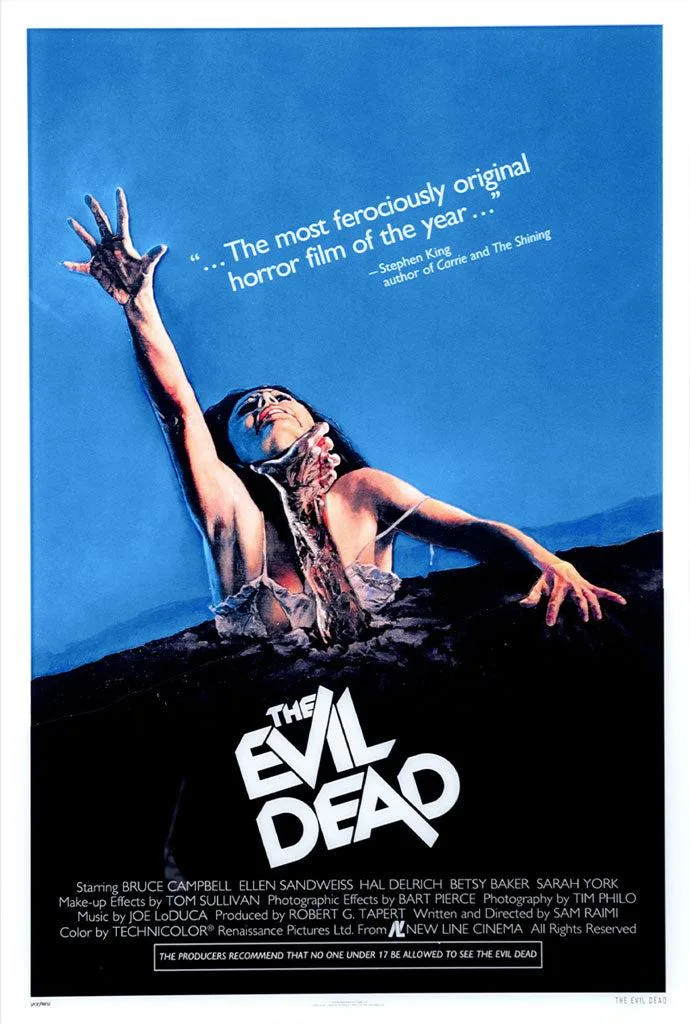
One cabin, several kinds of horror
Sam Raimi's The Evil Dead begins with young people in an isolated building and turns familiar surroundings against them. Possession makes friendship unreliable; an ordinary room can contain a threat; surviving another encounter does not restore any confidence that the next one will be manageable.
Evil Dead II reshapes that material through exaggerated physical comedy, while Army of Darkness pushes Ash toward a more overt action-hero role. The television series later extended that combination of bravado, incompetence, and supernatural mayhem.
The distinction matters for adaptations. The frightened man trapped in a cabin and the loudmouthed hero waving a chainsaw are recognizably the same character, but they imply different activities for a player.
A vulnerable Ash needs to conserve resources and secure a space. A confident Ash needs responsive attacks, entertaining enemies, and opportunities for a ridiculous comeback. A game that confuses those objectives can feel wrong even when the face and catchphrases are familiar.
Fortunately, the series gives developers room to choose. Its tone already contains a route from helplessness to excessive, noisy retaliation.
1984: close the window before something comes in
The Evil Dead · Home computers · Palace Software
The early computer game distills the original film into an overhead defense of the cabin. Ash moves through its limited space, closes openings, deals with creatures that get inside, and tries to prevent the building from becoming unmanageable.
The presentation is primitive, but the situation is well chosen. The cabin itself is the problem. Danger comes from its edges, and the player's attention cannot remain everywhere at once.
That is a useful example of adaptation under severe limits. You do not need a realistic face or a lengthy cutscene to communicate that an isolated shelter is failing. A handful of access points can create a recognizable version of the film's panic.
It is also a different role from the later action games. Here success means maintaining control over a hostile situation, not showing off a move set. The player is trying to postpone collapse long enough to deal with the cause.
Stories about the production's supposed curse make entertaining folklore, but they should not become a literal explanation for software problems. The actual design is interesting without supernatural assistance: a licensed film's location becomes an active system that needs constant attention.
Hail to the King: Ash enters the survival-horror era
2000 · PlayStation, Dreamcast, Windows · Heavy Iron Studios / THQ
Evil Dead: Hail to the King returns Ash to a more elaborate three-dimensional nightmare. Its fixed-camera presentation and resource pressures place it near the established survival-horror language of its era.
On paper, that seems sensible. A cabin, hostile creatures, limited supplies, and a recognizable hero offer familiar ingredients for a tense adventure. Bruce Campbell's performance also helps connect the game to the character fans expect.
The difficulty lies in how that tension feels to control. Awkward combat, repeated threats, and the demands of navigation can make a desperate struggle feel frustrating rather than frightening. The player needs enough confidence in the interface to blame a bad situation on the world, not on a character who will not do what they intended.
Ash creates another complication. His personality promises retaliation. If basic encounters make him feel continually ineffective, the gap between his voice and his practical ability becomes conspicuous.
That does not mean he should be invincible. It means the game must decide whether his swagger is comic compensation for vulnerability or a promise of satisfying action. The more loudly it makes the latter promise, the more convincing the controls need to be.
A Fistful of Boomstick: let him make a mess
2003 · PlayStation 2, Xbox · VIS Entertainment / THQ
A Fistful of Boomstick takes a more action-oriented route, sending Ash into a Deadite outbreak with a clearer emphasis on combat. The move makes sense for the version of the character who has already survived several impossible evenings and would like to get on with the retaliation.
The chainsaw becomes part of an immediate physical vocabulary rather than simply an iconic object to preserve. Attacks, upgrades, and groups of enemies support a louder, more energetic kind of adaptation.
There is a trade-off. The more capable Ash becomes, the less naturally the player experiences the original film's helplessness. But the franchise had already made that shift itself. A game does not have to force every installment back into the exact mood of the first movie.
The more useful question is whether the combat and surrounding structure sustain the character's momentum. A strong premise can still become repetitive, but it at least gives the player an understandable reason to want the next encounter.
Regeneration: the sidekick is also a projectile
2005 · PlayStation 2, Xbox, Windows · Cranky Pants Games / THQ
Evil Dead: Regeneration offers one of the series' most distinctive game ideas: give Ash a companion who can participate in grotesque slapstick as well as puzzles and combat.
Sam, the small half-Deadite voiced by Ted Raimi, is not merely someone who follows a path and delivers dialogue. He can reach places Ash cannot, interact with obstacles, and become the unfortunate instrument of an increasingly ridiculous plan.
Kicking a companion toward a problem is not conventional teamwork. Inside an Evil Dead game, it makes an alarming amount of sense.
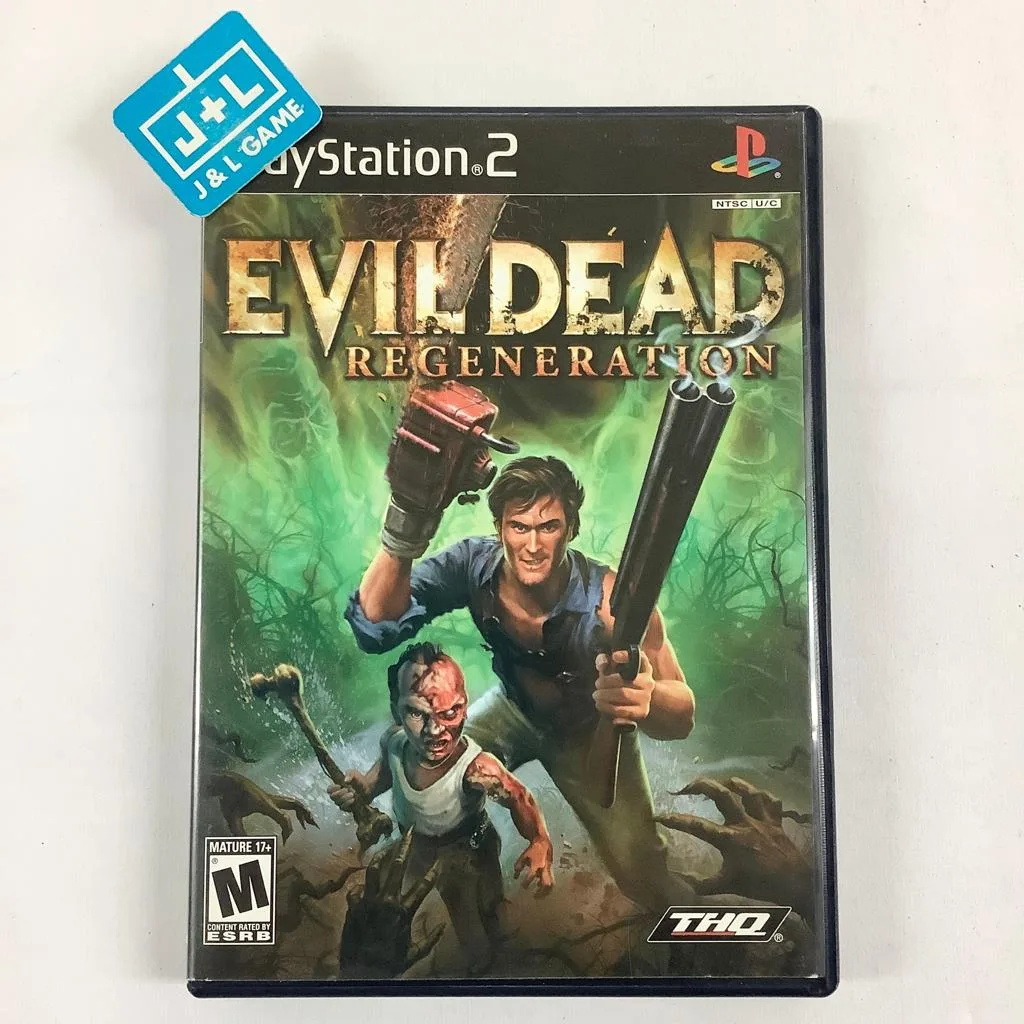
The alternate continuation of Evil Dead II gives the adventure freedom to invent its own predicament rather than carefully repeat the films. That freedom is valuable because a useful gameplay partnership needs situations designed around what both characters can do.
A developer interview described the intention to create a buddy-film dynamic. The important result is visible in the mechanics: the joke and the solution can be the same action.
This is why Regeneration remains a particularly appealing interpretation. It does not simply place comic dialogue between ordinary fights. It lets physical comedy help determine how the game works.
The tone also changes how the player interprets failure. A grotesque mishap can be part of the expected performance rather than a complete break in the fantasy. The adventure invites a mixture of aggression, problem-solving, and laughter that fits the franchise's later identity unusually well.
Smaller games find useful pieces of the films
The mobile years explored several different formats rather than one continuous style. Army of Darkness: Defense uses the medieval film's siege as the basis for a defense game, matching a memorable situation to a format built around holding off waves.
Other touchscreen and later VR experiments took different slices of the identity: the cabin, the creatures, the weapons, or a first-person encounter with supernatural danger. These deserve acknowledgment without turning the feature into a list of every device and rerelease.
The general lesson is that a good adaptation can be selective. Choosing one sequence or one kind of pressure may produce a more coherent game than attempting to reproduce the entire franchise in miniature.
Ash's 2019 arrival in Dead by Daylight makes another useful selection. He joins as a survivor, returning the confident monster fighter to a system where cooperation, evasion, and escape matter more than a familiar weapon loadout.
That apparent contradiction is part of the pleasure. Recognition supplies the character; the surrounding rules decide what he is currently allowed to do about his situation.
2022: a team of survivors against possession
Evil Dead: The Game brings together characters and imagery from several parts of the series in an asymmetrical multiplayer structure. Four survivors cooperate while a player-controlled demonic force interferes with their progress.
The demon's role is especially appropriate. Possession lets an opponent turn aspects of the environment—and potentially the survivors' own situation—against them. The threat is not confined to a single character chasing from one room to another.
The survivors need supplies, objectives, and a workable relationship with one another. Fear is more than a decorative meter: managing it helps determine how vulnerable the group becomes to the hostile force controlling the other side of the match.
This translates one of the films' strongest ideas. The world does not need to stop looking familiar before it becomes dangerous. Something that belonged to you a moment ago can become an instrument of the enemy.
The wider roster also lets different versions of the franchise coexist. For fans, the attraction is partly the opportunity to assemble an impossible team. For the game, the challenge is ensuring those recognizable identities fit a balanced set of useful roles.
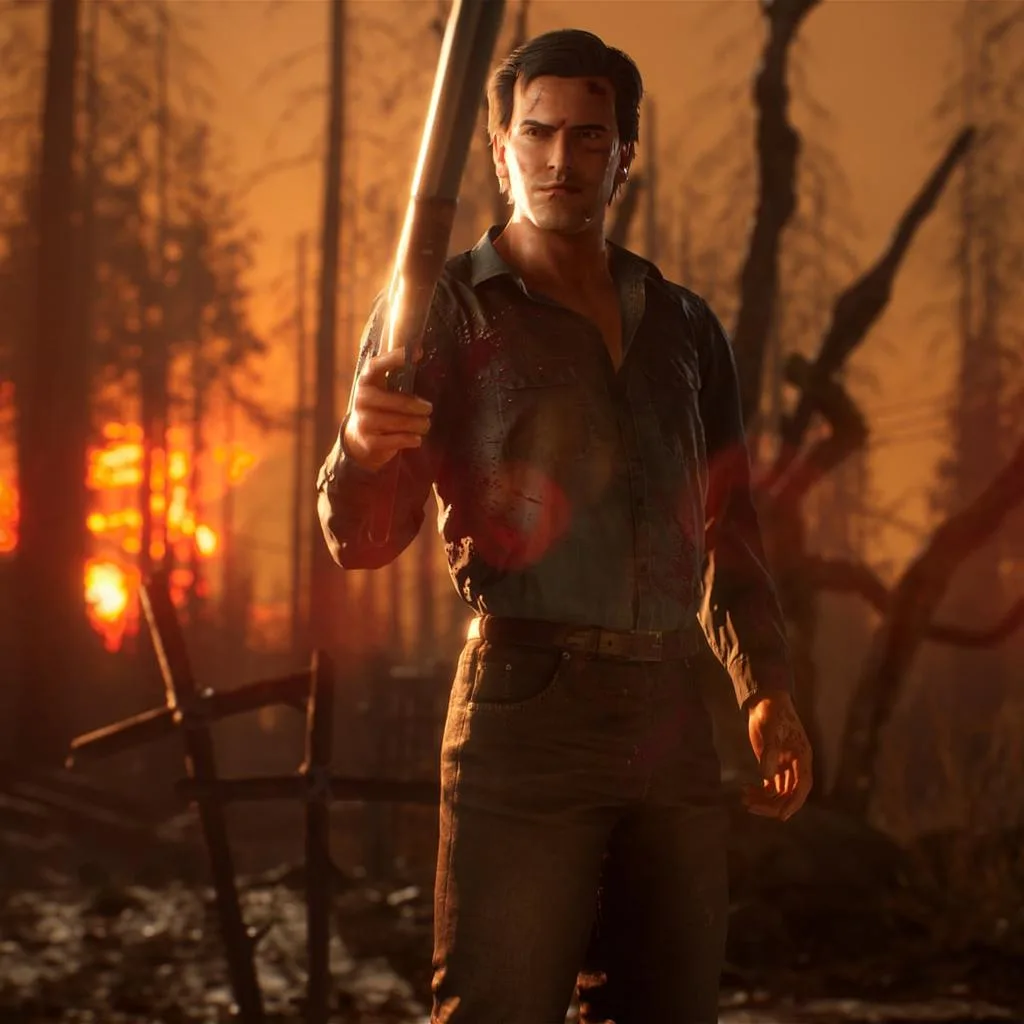
The limits of a multiplayer afterlife
New content development ended, and the game was later withdrawn from digital sale. Its Steam page now carries a notice that it is no longer available there.
Those developments should not be compressed into the unsupported claim that every existing owner's copy became unusable at the same instant. Availability, further development, and online operation are separate questions. A statement about one does not settle all the others.
The preservation problem is still clear. Fewer ways to obtain a game can make its community harder to sustain, and a multiplayer experience depends on more than possession of a disc or download.
That limitation is particularly unfortunate for a project whose distinctive achievement was bringing people together inside the franchise's world. The software contains the rules; other players supply much of what makes those rules interesting.
RetroRealms: a 16-bit Ash who never existed
RetroRealms: Ash vs Evil Dead arrived in 2024 alongside its Halloween counterpart. WayForward's platform adventure deliberately evokes an earlier style while using modern design and a shared arcade presentation.
It is an appealing imaginary-history exercise: what if Ash had received the kind of colorful, forceful action platformer fans associate with the 16-bit era?
The format suits his exaggerated physical identity. A readable attack, a good jump, a grotesque enemy, and a familiar weapon can communicate the character quickly. The Dark Realm adds another route through danger rather than demanding that the game mimic a film's exact sequence.
Its relationship with RetroRealms: Halloween also makes the crossover feel like part of a larger arcade collection. These are consciously designed playthings built from horror identities, rather than attempts to disguise a platformer as realistic cinema.
Which Ash should a game choose?
The early cabin defense understands vulnerability. Hail to the King seeks sustained survival horror. Boomstick favors retaliation. Regeneration turns a comic partnership into usable mechanics. The multiplayer game distributes possession and cooperation across opposing players.
Of these, Regeneration is especially interesting because its strongest idea belongs to the tone as well as the rules. Sam is funny because of what happens to him, and useful because the game makes those happenings part of its solutions.
That is the standard I would apply across the series. Including a chainsaw is easy. Making the player move between panic, absurdity, and an improbable comeback is the harder achievement.
Ash does not need to be competent all the time. He needs a game that understands why watching him recover from incompetence can be so entertaining.
Previously: Part 5 — The Texas Chain Saw Massacre. Next: Part 7 — Alien.
Sources and image credits
- Richard Leinfellner's development interview: the early Palace computer-game background, preserved here as a firsthand historical reference.
- Regeneration designer interview: the intended buddy-film relationship and companion design.
- The multiplayer game's publisher-controlled Steam listing: team premise and current delisting notice. The Steam date concerns that platform's edition rather than the original 2022 launch.
- Official RetroRealms announcement: the paired 2024 releases and WayForward's platform-game approach.
All three images came with the supplied draft. Captions identify the source labels and depicted works; original rights remain with their owners. Discussion includes story and gameplay spoilers.
Keep the horror playing
Listen after dark
If you’d like to keep the atmosphere going, here’s Under The Covers: 12 Nights of Horror—my arrangements of themes from Halloween, Friday the 13th, Jaws, The Exorcist, Silent Hill, and more.